Our Location
304 North Cardinal St.
Dorchester Center, MA 02124
Shop carefully sourced M57 engines for sale with fitment support, inspection details, warranty options, and delivery for BMW diesel replacement projects.
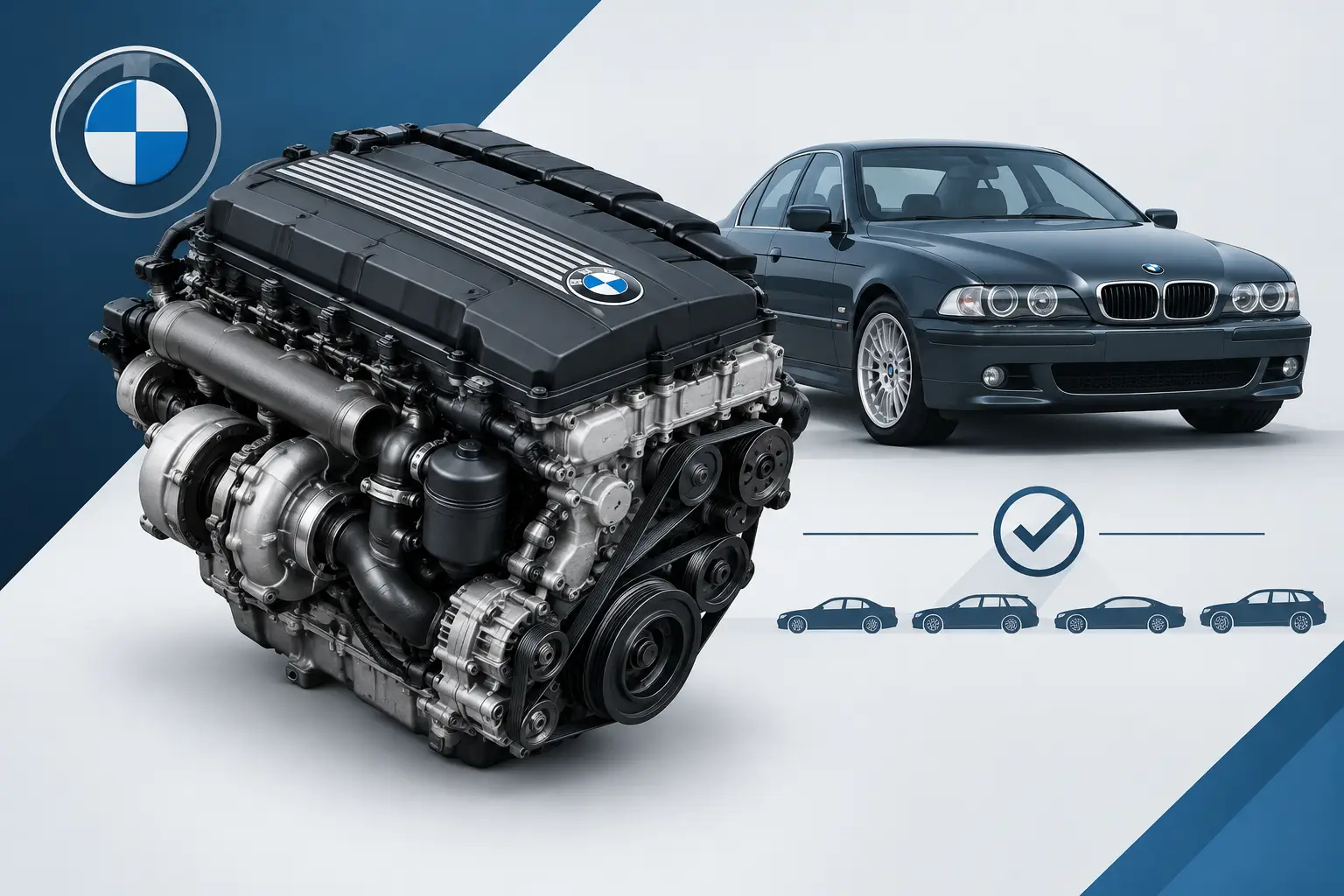
A failed diesel engine can turn a capable BMW into an expensive driveway ornament, especially when the rest of the vehicle is in good shape. The right M57 engines for sale offer a practical alternative to rebuilding a severely damaged unit or paying new-engine prices. But an M57 purchase is not simply about finding a 3.0-liter BMW diesel at the lowest price. Correct engine code, donor condition, electronics, and intended use all matter.
The M57 has earned a strong reputation among BMW diesel owners for its torque, long-distance capability, and tuning potential. A carefully sourced replacement can put a 3 Series, 5 Series, X3, X5, or 7 Series back on the road with OEM-level compatibility. The key is matching the assembly to the vehicle before it ships.
BMW produced the M57 as an inline-six turbo-diesel engine in several generations and output levels. Early M57 engines, later M57N versions, and M57N2 variants share the same basic appeal, but they are not automatically interchangeable. Changes in turbocharger arrangement, injectors, emissions equipment, wiring, sensors, and control systems can affect whether an engine will work correctly in a specific chassis.
For drivers, the appeal is straightforward. A healthy M57 delivers strong low-end torque for daily driving, towing, and highway use while retaining the refined character expected from a BMW six-cylinder. For repair shops and trade buyers, it remains a worthwhile replacement option because many vehicles powered by this engine are still structurally sound and economically viable to repair.
A used engine is often the sensible choice when the original unit has suffered low compression, bearing damage, overheating, excessive oil consumption, or a major timing-related failure. It also suits restoration projects where keeping the vehicle close to its original specification matters more than fitting a newer, more complicated powertrain.
“M57” identifies an engine family, not one universal replacement engine. Before ordering, confirm the complete engine code from the existing engine, vehicle VIN, registration details, or factory build information. This is particularly important for the M57D30, M57N, and M57N2 families, as well as single-turbo and twin-turbo applications.
Common M57-powered BMW applications can include the E46 330d, E39 530d, E60 and E61 525d/530d, E90/E91/E92 diesel models, E83 X3, E53 X5, E70 X5, and selected 7 Series platforms. Exact availability varies by market, model year, and donor stock. In the United States, many M57 inquiries relate to imported vehicles, diesel SUV applications, or specialist projects, while UK and international buyers may be replacing engines in a broader range of factory diesel models.
The engine code alone is a strong starting point, but it should not be the final check. A supplier should compare VIN-based fitment and confirm details such as transmission type, sump configuration, turbo setup, intake and exhaust hardware, injector specification, and sensor connections. This avoids a common and costly mistake: buying an engine that is mechanically similar but requires unexpected parts transfers or electronic modifications.
The term “engine” can mean different things from one seller to another. A complete assembly may include major ancillaries such as the turbocharger, injectors, intake manifold, fuel system components, and wiring-related hardware. A long block generally focuses on the core mechanical unit, such as the block, crankshaft, pistons, cylinder head, and valvetrain.
Neither format is automatically better. A complete engine can reduce installation time when the donor specification matches closely. A long block may be the better value when reusable components from the original engine are known to be in good condition. The important point is to establish exactly what is included before purchasing, rather than assuming every visible component is part of the sale.
A lower-mileage donor is attractive, but mileage should be considered alongside inspection results and the engine’s known history. An engine that has been professionally inspected for mechanical condition can offer far more confidence than an unverified unit with a favorable mileage claim.
At BAV Engines, replacement BMW engines are carefully sourced and evaluated with the practical concerns of installation in mind. For an M57, useful condition checks include compression where applicable, oil quality and evidence of contamination, visible wear, signs of overheating, crankshaft rotation, and the general condition of external components. A proper assessment should also look for damage around mounting points, the oil pan, turbocharger connections, and cooling-system interfaces.
No used engine should be represented as a brand-new factory unit. Age-related wear is possible, and certain service items are sensible to address while the engine is out of the vehicle. Depending on the donor condition and installation plan, a technician may recommend replacing accessible seals, gaskets, filters, belts, hoses, thermostats, or other maintenance components before installation. This is often cheaper and easier than revisiting the job later.
An M57 replacement project should not stop at the engine itself. If the original engine failed because of contaminated oil, a failed turbocharger, an injector issue, cooling-system trouble, or a fuel-system fault, that root cause must be resolved. Installing a replacement engine without correcting the underlying issue can put the new unit at risk.
Turbocharged diesel engines also depend on clean oil supply and properly functioning intake plumbing. The installer should inspect oil feed and return lines, intercooler pipework, boost hoses, air filtration, and the charge-air system for debris or leaks. If a previous turbo failure occurred, thorough cleaning and diagnosis are essential.
For emissions-equipped vehicles, preserve the correct configuration for the chassis and local requirements. EGR, DPF, sensors, wiring, and engine management components should be handled by a qualified technician. An engine swap does not remove the need to comply with applicable emissions, registration, and inspection rules. This is especially relevant for cross-border projects and imported diesel BMWs.
The fastest route to the wrong engine is ordering from a generic listing based only on displacement. A better approach is to provide the VIN or registration number, the full engine code when available, and clear details about the vehicle’s transmission and original setup. If the engine is for a swap rather than a direct replacement, say so at the start. Swap projects may need additional hardware, ECU planning, wiring changes, mounts, or a suitable M57 swap kit.
Before the engine is dispatched, clarify whether the price covers the complete assembly or a core configuration, which accessories are included, whether warranty options are available, and how delivery will be arranged. These questions are not administrative details. They determine the real cost and timeline of the repair.
For independent garages, documenting the incoming engine code and visible condition before installation is good workshop practice. For private owners, choosing a BMW-focused supplier can remove much of the uncertainty, particularly if you are not comfortable identifying the differences between M57 variants yourself.
An M57 engine replacement is a substantial job, so it pays to prepare the vehicle as carefully as the engine. Ask the installer to inspect the cooling system, gearbox or torque converter interface, engine mounts, exhaust connections, and serviceable components that are difficult to reach once the engine is installed. A few preventative parts can protect the labor investment and support a dependable return to service.
The best M57 purchase is not necessarily the cheapest listing. It is the engine that matches your BMW correctly, has been tested for quality and reliability, arrives with clear expectations, and is supported by knowledgeable fitment assistance. With the right donor assembly and proper installation, an M57 can give a well-maintained BMW many more useful miles.