Our Location
304 North Cardinal St.
Dorchester Center, MA 02124
BMW diesel engine replacement made clearer: compare N47, N57, B47, and B57 fitment, donor condition, warranty options, and delivery before ordering online.
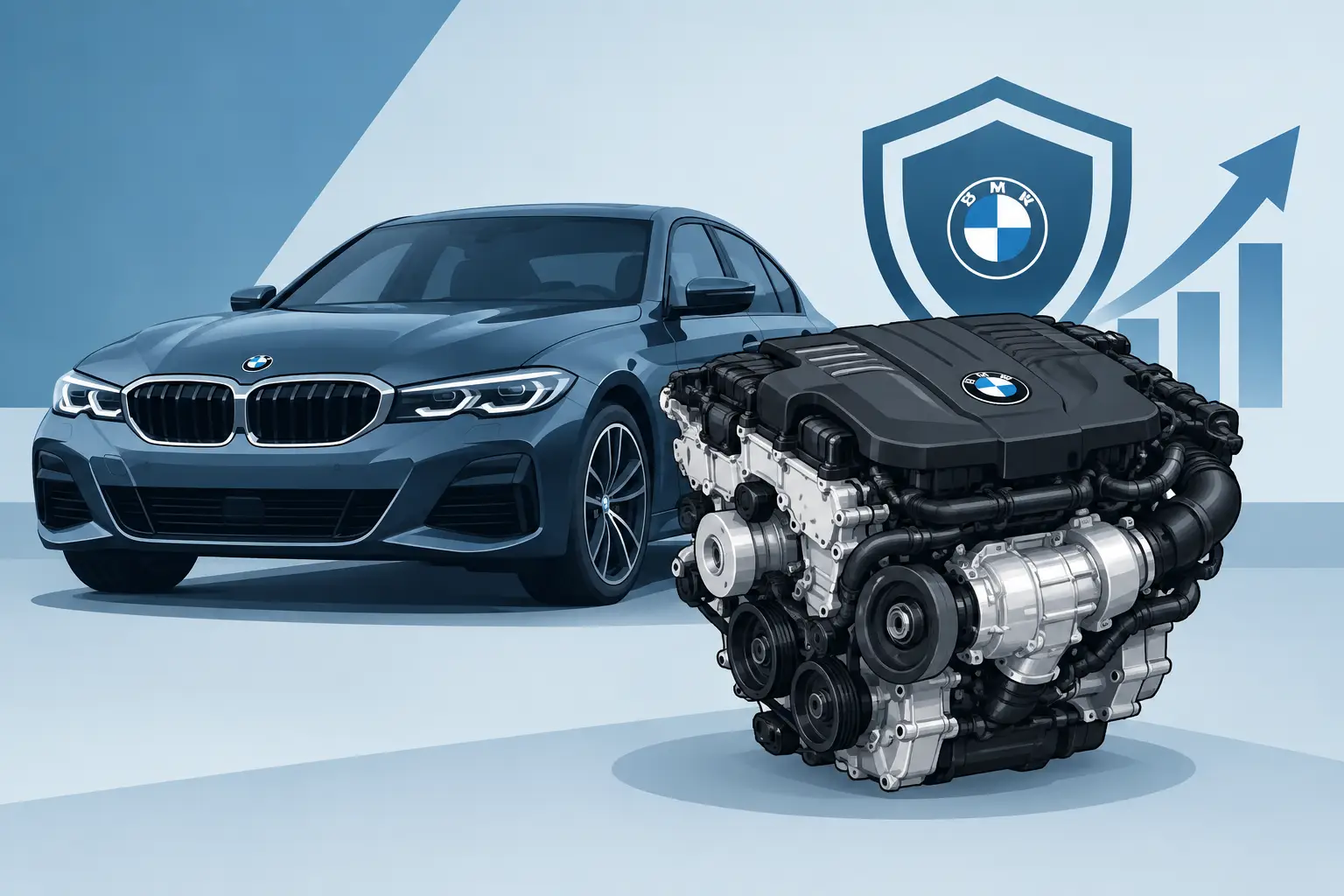
A BMW diesel engine replacement is rarely a purchase you plan for. A timing chain concern, loss of compression, overheating event, oil-pressure problem, or severe internal wear can quickly turn a dependable daily driver into a vehicle that is off the road. The right replacement engine can restore the car for far less than the cost of a new factory assembly, but only when the engine code, emissions equipment, electronics, and donor condition are checked before ordering.
For BMW owners and repair shops, the goal is not simply to find an engine with the same displacement. It is to source an OEM-compatible diesel assembly that matches the vehicle correctly, has been professionally inspected, and can be installed without expensive surprises.
A replacement engine is often the practical route when internal damage has been confirmed. Crankshaft or bearing failure, a cracked block, piston damage, severe cylinder wear, or a timing-chain failure that has damaged valves can make rebuilding the original unit costly and uncertain. This is especially true when a rebuild would require major machining, a new cylinder head, injectors, turbocharger work, and extensive labor.
A used replacement engine can offer a more controlled repair cost. You receive a complete core assembly from a low-mileage donor rather than paying for every individual internal component and machine-shop operation. For many BMW diesels, that approach gets the vehicle back on the road sooner while retaining the driving torque and fuel economy that made the car worth keeping.
That said, replacement is not always the answer. A failed EGR valve, DPF restriction, injector fault, turbo actuator issue, or cooling-system leak can create symptoms that resemble engine failure. Accurate diagnosis comes first. Replacing a complete engine when the fault is peripheral is an unnecessary expense, so a technician should verify compression, oil pressure, fault codes, coolant condition, and the source of any metal contamination before a purchase is approved.
BMW diesel engines can look similar while having important differences in fuel systems, turbocharger layouts, sensors, ECU calibration, oil pans, and emissions hardware. The engine code is the starting point for correct fitment.
The M57 is a well-regarded six-cylinder diesel family used across earlier BMW passenger cars and SUVs. Depending on market and application, it can be found in models such as the 335d, X5 35d, and various 5 Series and 7 Series diesels. Its strength and tuning potential also make it popular for specialist conversions, although an M57 swap requires far more planning than a like-for-like replacement.
The N47 is BMW’s four-cylinder diesel engine family, fitted to a broad range of 1 Series, 3 Series, X1, and X3 applications. It delivers efficient performance, but timing-chain condition is a major consideration on affected versions. A replacement N47 must be selected carefully by engine code and production details, not just by the vehicle badge.
For six-cylinder applications, the N57 was used in diesel versions of the 3 Series, 5 Series, 7 Series, X3, X5, and X6. It is available in different output levels, including single-turbo and multi-turbo configurations. A 535d or X5 35d engine may not share every component or calibration requirement with another N57-equipped BMW, even if both are listed as 3.0-liter diesels.
Later B47 and B57 engines brought updated modular BMW diesel design. The B47 is a four-cylinder unit found in later 2 Series, 3 Series, 4 Series, X1, X3, and related diesel platforms, while the B57 is a newer six-cylinder diesel used in higher-output executive and SUV applications. These engines need particularly careful verification because emissions systems, wiring, control modules, and ancillaries vary by year and market.
The VIN gives a supplier or technician the information needed to identify the original engine specification, production period, and vehicle configuration. The registration can also help, but the VIN and engine code provide the stronger basis for a correct order.
Before ordering, confirm the engine code, fuel type, transmission type, model year, drivetrain, and whether the vehicle uses rear-wheel drive or xDrive. Supply clear details about what has failed on the original engine and whether you require a long block, a complete assembly, or an engine with specific external components retained.
An experienced BMW engine supplier can use this information to identify the closest compatible replacement and explain what should be transferred from the original unit. This reduces the risk of ordering an engine that physically fits but creates installation problems later.
A used engine should never be treated as an unknown core pulled from a dismantler’s shelf. Donor mileage, storage conditions, mechanical checks, and visible condition all matter. At BAV Engines, BMW diesel engines are carefully sourced and professionally inspected to support a more confident repair decision.
A useful inspection process should consider at least these areas:
No used engine is identical to a new factory assembly, and honest expectations matter. Injectors, turbos, alternators, air-conditioning compressors, and sensors may be included on an engine but should be treated according to the supplier’s stated terms. In many installations, the best practice is to transfer known-good vehicle-specific accessories from the original engine where appropriate.
For a diesel BMW, it is also sensible to inspect or renew service-related parts while the engine is out. Depending on the engine family and mileage, this may include seals, belts, water pumps, thermostats, glow plugs, intake gaskets, and timing components. Spending on these accessible items during installation can prevent repeat labor later.
A replacement engine does not remove the need to address the systems around it. Modern BMW diesels rely on the DPF, EGR system, NOx sensors, intake components, boost-control hardware, and, on many models, SCR or DEF equipment. If the original engine failed because of a related fault, that issue must be corrected before the replacement unit is run.
For example, a blocked DPF can contribute to high exhaust backpressure, while an injector problem can cause poor combustion and piston damage. A leaking oil cooler, failed thermostat, or contaminated intercooler can also compromise a replacement engine if left unresolved. The installer should identify the root cause, clean affected intake and charge-air components, and follow the proper BMW diagnostic procedures after installation.
ECU coding or adaptation requirements depend on the model and the components transferred. A like-for-like engine installed with the original electronics may require less programming than an engine from a different production variant. This is another reason to confirm compatibility before shipment, not after the vehicle is dismantled.
The purchase price of the engine is only one part of a BMW diesel repair. A realistic estimate includes labor, shipping, fluids, filters, gaskets, replacement service parts, diagnostics, and any repairs needed to the fuel, cooling, intake, or emissions systems.
A lower-priced engine with uncertain fitment can become expensive if it delays the job or requires unplanned modifications. A correctly identified, low-mileage unit with documented inspection, warranty options, and dependable shipping often represents better value. For independent shops, that also means a more predictable turnaround and a stronger result for the customer.
Whether you are restoring an N47-powered 3 Series, replacing an N57 in an X5, or sourcing a later B47 or B57 assembly, purchase with confidence by matching the engine to the vehicle’s exact specification and addressing the cause of the original failure. A properly selected BMW diesel engine can give a well-maintained vehicle many more reliable miles.