
Our Location
304 North Cardinal St.
Dorchester Center, MA 02124
BMW engine replacement cost varies by engine code, labor, mileage, and condition. See what to budget and how a tested used BMW engine can help today.
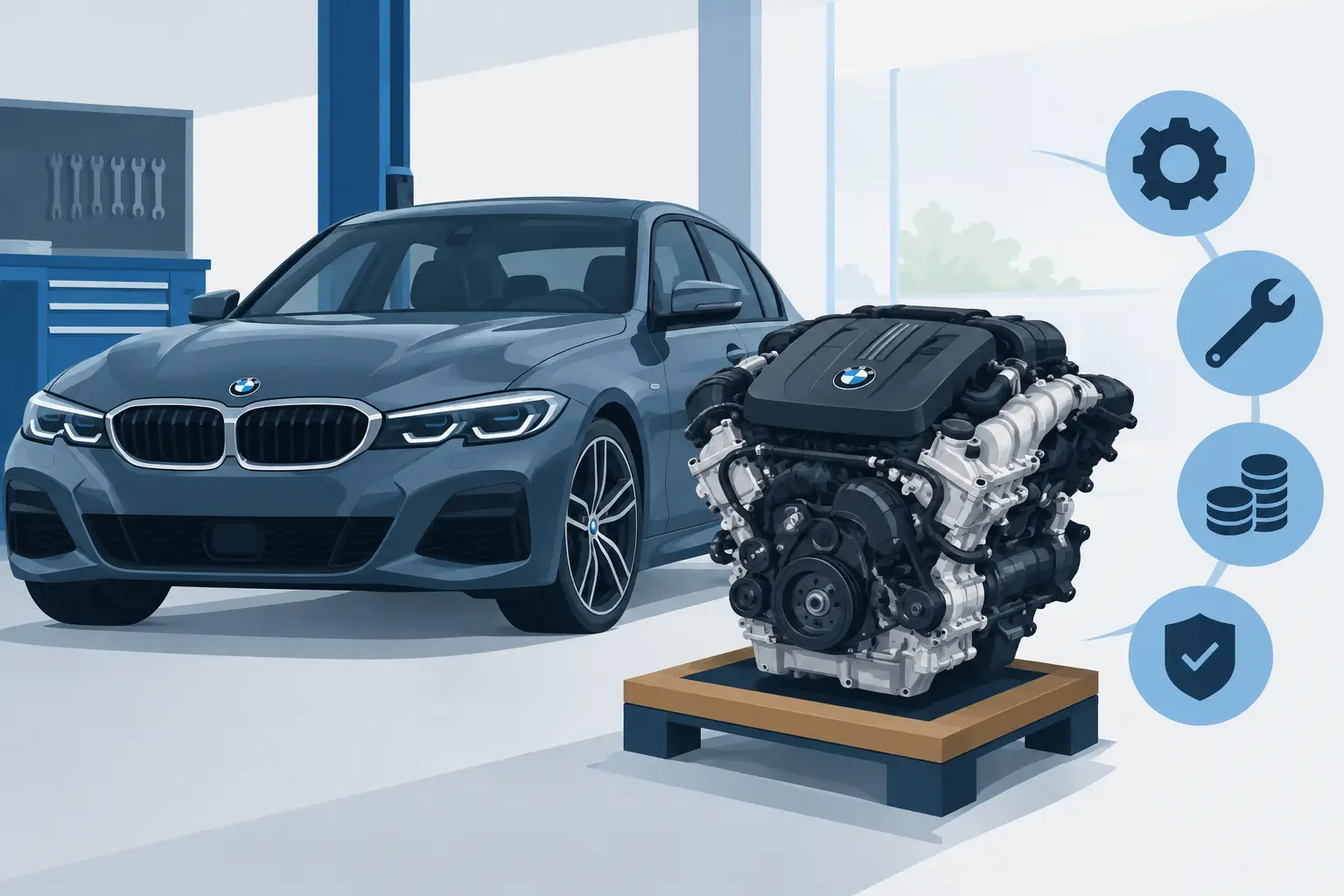
A BMW with a damaged engine can leave owners facing a repair estimate that seems larger than the vehicle’s value. The BMW engine replacement cost is not one fixed number, however. A four-cylinder 3 Series engine and an S63 twin-turbo V8 for an M car are very different purchases, and the final bill depends as much on fitment and labor as the engine itself.
For many owners, a professionally inspected used engine is the sensible middle ground between an expensive new factory assembly and the uncertainty of repairing an engine with extensive internal damage. The right replacement can put a well-maintained BMW back on the road for far less than the cost of buying another vehicle, provided the engine code, vehicle specification, and installation scope are confirmed first.
In the US, a used BMW engine assembly commonly ranges from about $2,000 to $8,000 before installation. Smaller naturally aspirated gasoline engines may sit toward the lower end of that range, while late-model turbocharged, diesel, hybrid-compatible, and M-series units can cost substantially more. Low donor mileage, a complete configuration, warranty coverage, and limited market availability all increase the purchase price.
Labor generally adds another $1,500 to $5,000 or more. BMW engine removal often requires significant disassembly around the cooling system, exhaust, turbocharger hardware, wiring, and front-end structure. Labor rates also vary widely between independent BMW specialists and dealership service departments.
As a practical guide, an installed replacement for an older four-cylinder BMW might total $4,000 to $7,000. A six-cylinder model with an N55, B58, N47, N57, or B57 engine may land around $6,000 to $12,000 depending on condition and parts required. Replacing an S55, S58, or S63 high-performance engine can move well beyond $15,000, particularly when turbos, fuel-system components, cooling parts, or electronic modules must also be addressed.
These are planning figures, not universal quotes. The same engine family can be priced differently because of its exact engine code, production year, drivetrain layout, emissions specification, and the components included with the assembly.
The engine code matters more than the badge on the trunk. A BMW 5 Series, for example, may have been sold with several gasoline and diesel engines across different years. Ordering an engine based only on “BMW 530i” can create an expensive fitment problem. The VIN, registration details, and original engine code provide a far safer starting point.
Mileage and mechanical condition are equally important. A low-mileage donor engine that has been carefully sourced and professionally inspected will usually cost more than an unverified unit. That difference can be worthwhile. Compression condition, oil quality, visible wear, cooling-system condition, and signs of prior damage all help determine whether an engine is suitable for resale and installation.
The level of completeness also changes the price. Some replacement engines are supplied as a long block, while others include components such as the cylinder head, valve cover, oil pan, injectors, turbochargers, intake parts, or ancillary hardware. A less expensive engine may look attractive until the installer has to transfer numerous worn or damaged components from the original unit. Always clarify exactly what is included before comparing quotes.
Vehicle layout affects labor. Rear-wheel-drive and xDrive BMW models can have different installation requirements, while X Series SUVs may allow less access around the engine bay. A diesel replacement can involve additional work with emissions equipment, and high-performance M engines often carry more complex cooling, turbo, and wiring systems.
A failed engine can damage more than internal mechanical components. If an engine overheated, lost oil pressure, ingested coolant, or suffered a timing-chain failure, the shop should inspect the cooling system, oil cooler, turbochargers, intake tract, catalytic converters, and transmission connections as appropriate.
This is where a low initial estimate can become misleading. Replacing an engine without correcting the cause of failure risks damaging the replacement unit. For example, a blocked radiator, contaminated oil cooler, failed injector, or defective turbo oil supply line may need attention before the vehicle returns to service.
A new factory engine is the most expensive option and can be difficult to justify on an older vehicle. It may be the preferred route for a nearly new BMW, a vehicle with comprehensive coverage, or a specialist restoration where original factory-new components are the priority. Availability can also be limited, especially for older engine families.
A rebuilt engine can be a good option when the rebuilder has a documented process, uses correct internal parts, and provides meaningful warranty support. Quality varies significantly, though. A rebuild is only as dependable as the machining, parts selection, assembly standards, and testing behind it.
A tested used engine is often the strongest value for drivers who want OEM-level compatibility without new-engine pricing. BMW engines such as the M57, N47, N57, B47, B57, B58, S55, S58, and S63 have distinct configurations, and a correct donor assembly can reduce the amount of adaptation required during installation. It also preserves the original design rather than mixing unknown rebuilt parts into the vehicle.
At BAV Engines, replacement BMW and MINI engines are carefully sourced and inspected with attention to mechanical condition, visible wear, oil quality, and donor mileage. That BMW-specific approach helps private owners and repair shops purchase with confidence rather than trying to make a general used-parts listing fit a specialized vehicle.
Before approving an engine purchase, provide the supplier or installer with the VIN, registration information, model year, engine code if available, and a clear description of the failure. Mention whether the vehicle is rear-wheel drive or xDrive, whether it has been modified, and whether the original engine has reusable accessories.
Ask whether the price is for the engine alone or a more complete assembly. Confirm the donor mileage, inspection process, warranty terms, shipping arrangements, and any required core return. These details matter more than a headline price because they determine what the shop will need to source separately.
You should also ask the installer to separate labor from parts on the estimate. This makes it easier to see whether replacing hoses, mounts, gaskets, fluids, spark plugs, injectors, timing components, or cooling-system parts is recommended while the engine is out. Some of these services add cost now but can prevent a second major labor bill later.
Engine replacement is usually worth considering when the BMW is otherwise in good condition, has a sound transmission and chassis, and has enough market or personal value to justify the repair. A clean 3 Series, 5 Series, X3, X5, or MINI with documented maintenance may be far less expensive to repair than to replace with a comparable vehicle.
It may be less sensible if the car also needs major transmission work, extensive rust repair, suspension rebuilding, and bodywork. The decision is not only about resale value. Owners who know their vehicle’s history often prefer a replacement engine over buying an unknown used car with its own hidden maintenance needs.
A dependable engine replacement begins with correct identification, not the lowest advertised price. Match the engine by VIN and code, choose a tested unit with clear condition information, and let the installer address the original cause of failure. That approach gives your BMW the best chance of returning to the road with reliable performance and a repair bill you can plan for.