Our Location
304 North Cardinal St.
Dorchester Center, MA 02124
Find a low mileage BMW replacement engine with verified fitment, documented inspection, warranty options, and shipping support for a dependable repair.
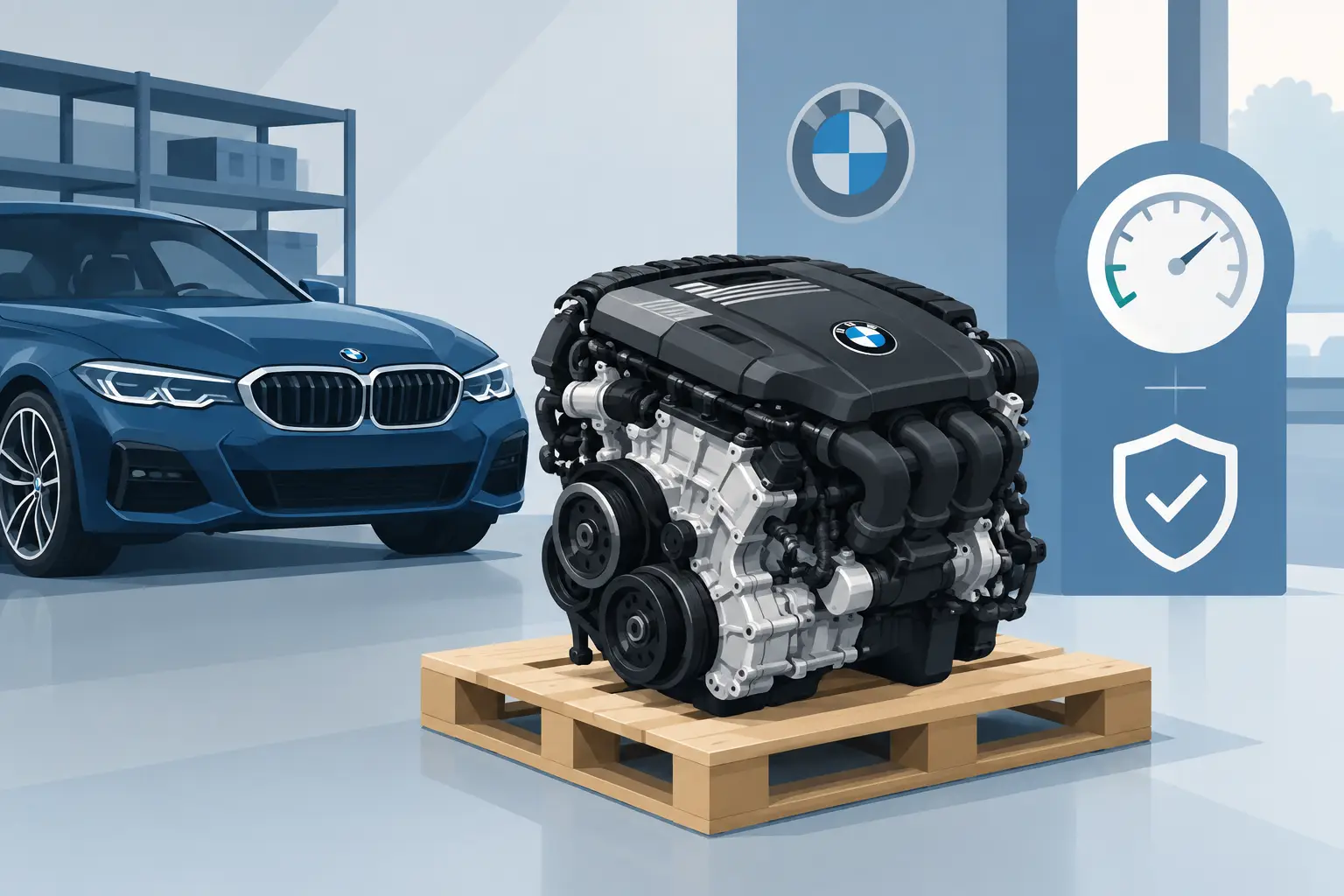
A low mileage BMW replacement engine can make the difference between retiring a vehicle you know well and returning it to the road for a fraction of the cost of a new factory unit. But mileage alone does not prove an engine is the right purchase. The engine code, vehicle VIN, donor condition, included components, and inspection standard all matter just as much.
For a BMW owner dealing with overheating damage, timing-chain failure, oil starvation, excessive smoke, or low compression, a carefully sourced used engine is often the most sensible repair path. The goal is not simply to find the cheapest engine available. It is to buy an OEM-compatible assembly that fits correctly, has been professionally inspected, and gives your workshop a realistic route to a dependable installation.
Lower donor mileage generally means less operating wear on internal moving parts. Pistons, rings, cylinder walls, bearings, valvetrain components, and turbochargers have typically completed fewer heat cycles and fewer miles of load. That can be particularly valuable on complex BMW engines with turbocharging, direct injection, variable valve timing, and tightly packaged cooling systems.
A lower-mileage N47 diesel, for example, may be a better starting point than a high-mileage unit when replacing an engine affected by serious bottom-end or timing damage. The same principle applies to gasoline engines such as the turbocharged B58 or performance-focused S55 and S58. However, a 40,000-mile donor that was poorly maintained or damaged in an accident is not automatically a safer choice than a properly documented 70,000-mile engine.
Condition must support the mileage claim. A quality supplier should assess visible wear, oil condition, mechanical operation, and the overall state of the engine before sale. Where appropriate, compression testing and other checks help identify concerns before the engine reaches your repair shop. Ask how donor mileage is recorded and what inspection information is available for the particular unit.
BMW fitment is rarely as simple as matching the model badge on the trunk. A 3 Series, X3, or 5 Series may use different engines across model years, markets, drivetrain configurations, and emissions specifications. Even engines that share a displacement can have important differences in electronics, turbo setup, oil pan design, wiring, injectors, sensors, and ancillary equipment.
The safest starting point is the engine code. Common diesel families include M57, N47, N57, B47, and B57, while popular gasoline options include B58, S55, S58, and S63. An M57 from one platform may be an excellent candidate for a repair or swap project, but it still needs to be checked against the intended gearbox, sump arrangement, wiring requirements, ECU strategy, and emissions equipment.
Provide the VIN or registration when requesting a replacement engine. This allows a BMW specialist to identify the original engine specification and check whether the donor unit is a direct fit or requires parts to be transferred from your failed engine. It is especially helpful for owners who know their model year but do not know whether they have an N57, B47, or another variant.
Most customers need a direct replacement engine to get their BMW back on the road with minimal complication. In that case, retaining the original engine family and matching the correct code usually keeps labor, programming, and parts transfer requirements under control.
Conversion projects are different. An M57 swap, for example, can be a practical choice for an experienced builder when supported by the correct swap kit and a clear plan for mounting, fueling, cooling, electronics, exhaust, and transmission compatibility. These projects can deliver strong results, but they are not a shortcut. Budget for supporting parts and skilled installation rather than assuming the engine assembly alone completes the job.
A complete engine assembly can mean different things between suppliers. Before ordering, confirm exactly what is supplied and what must be transferred from your existing engine. This prevents delays when the engine is already on the shop floor.
A used BMW engine may be supplied as a long block or with selected ancillaries attached. Items such as turbos, intake manifolds, fuel systems, wiring looms, alternators, AC compressors, starters, injectors, and engine control modules may or may not be included. Attached components should also be treated as used parts unless their condition and coverage are specifically stated.
For many repairs, your technician will transfer known-compatible external components from the original engine after inspection. This is common because the original accessories and wiring are already matched to the vehicle. It also gives the installer an opportunity to replace sensible service items while access is easier, including seals, gaskets, filters, belts, coolant hoses, thermostats, and worn vacuum lines.
A replacement engine is a major purchase, so general statements that an engine is “good” are not enough. Look for a seller that can explain how stock is sourced and what is checked before it is offered for sale. BAV Engines focuses on BMW and MINI powertrains, giving buyers access to fitment support rather than a general salvage-yard listing with limited technical detail.
The most useful inspection conversation covers several areas:
No used engine can be described as new, and a reputable supplier should not pretend otherwise. The value lies in buying a carefully sourced unit that has been tested for quality and reliability, with clear expectations about its used condition. That is a far more dependable approach than choosing an engine only because its listing price is low.
A low mileage BMW replacement engine can reduce the cost of a major repair, but the engine purchase is only one part of the invoice. Labor, fresh fluids, programming, replacement gaskets, consumables, and transferred components all affect the final total. Turbocharged diesel and gasoline BMWs can also require diagnosis of the original failure before the replacement is installed.
If the prior engine failed because of a blocked oil feed, failed injector, cooling-system fault, contaminated intake, or damaged turbocharger, that root cause must be corrected. Installing a sound engine without addressing the cause of failure can damage the replacement unit quickly. A professional installer should inspect related systems before first startup and follow the correct oil priming, cooling bleed, adaptation, and coding procedures.
It can be worth replacing accessible wear items during installation, even when they are not yet failing. This depends on the engine family and vehicle mileage, but preventive work is usually less expensive while the engine is out than after the vehicle is reassembled.
Warranty availability adds useful protection, but read the terms before purchasing. Understand the coverage period, what documentation is required, whether professional installation is expected, and which parts or failures are excluded. Keep the invoice, installation records, service receipts, and photographs if requested. These details matter if you ever need support.
Shipping also deserves planning. A complete engine needs secure palletized transport and a delivery address capable of receiving it. Independent repair shops often have the best facilities, but private buyers can arrange delivery to a commercial location if necessary. Inspect the shipment for obvious transport damage before installation and report concerns promptly.
For international buyers, confirm the engine code, delivery destination, customs requirements, and the practical availability of local installation support before ordering. A correct engine shipped across borders is still only a good purchase if your technician can complete the installation properly.
Start with the VIN, registration, or confirmed engine code. Then compare donor mileage, inspection detail, included parts, warranty options, and delivery timing rather than relying on one headline figure. A low-mileage unit with verified fitment and a clear condition report is usually a stronger investment than an unknown engine that appears cheaper upfront.
Whether you are restoring a daily-driven 1 Series, repairing an X5 diesel, keeping a 5 Series on the road, or sourcing a performance engine for an M-car project, the right replacement begins with accurate identification. Purchase with confidence by giving your supplier the vehicle details and giving your installer enough information to plan the job correctly.
[…] are selected with the needs of BMW owners, independent workshops, and trade buyers in mind. Low-mileage donor availability can vary, so the most sensible purchase is the correctly specified engine in […]
[…] wiring, turbo systems, mounting hardware, oil pans, emissions equipment, or control modules. A low-mileage used engine is only good value if it is compatible with the vehicle it is going […]