Our Location
304 North Cardinal St.
Dorchester Center, MA 02124
B58 engines for sale with fitment support, inspected donor condition, warranty options, and shipping for BMW engine projects across the US for buyers.
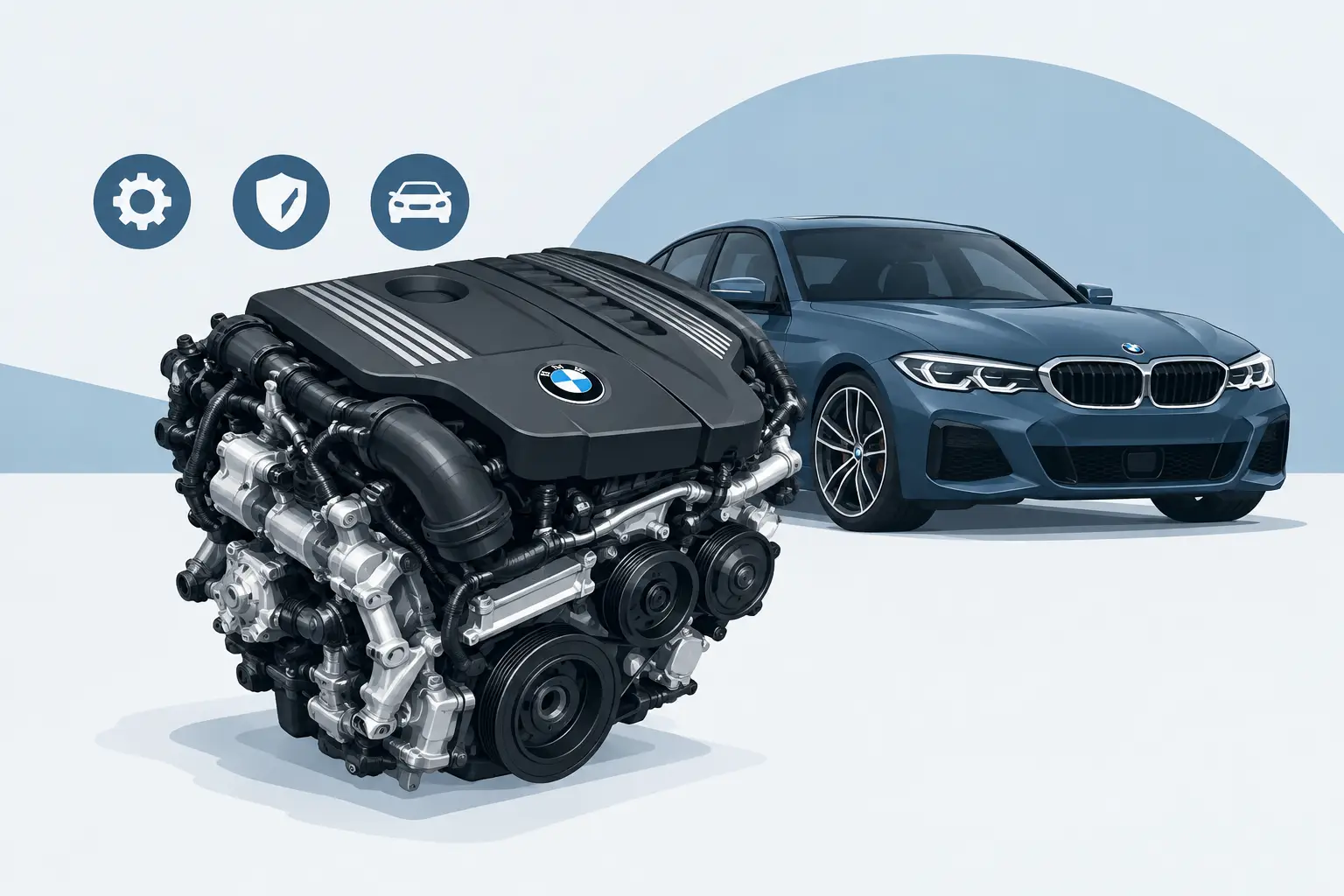
A failed B58 can turn a capable BMW into an expensive driveway fixture quickly. Whether the issue is low compression, overheating damage, oil contamination, turbo-related failure, or excessive internal wear, choosing from available B58 engines for sale is often a more practical route than paying for a new factory unit. The key is buying the correct version, understanding what is included, and confirming compatibility before the engine reaches your shop.
The B58 is one of BMW’s most respected modern turbocharged gasoline engines, but it is not a single interchangeable assembly across every model. A properly selected used replacement can restore the smooth power, refinement, and daily reliability owners expect while keeping repair costs under control.
BMW introduced the 3.0-liter inline-six B58 as part of its modular engine family. Its single twin-scroll turbocharger, direct injection, variable valve timing, and strong low-end torque make it a popular powerplant for both standard BMW models and M Performance variants. It combines everyday drivability with the kind of response that makes a 340i, M340i, 440i, 540i, X3 M40i, or Z4 M40i feel distinctly different from a four-cylinder alternative.
That performance also means replacement decisions deserve care. A B58 may fail because of a localized issue that can be repaired, such as a cooling-system component, external oil leak, or accessory fault. In other cases, continued overheating, bearing damage, cylinder wear, hydrolock, or a severe timing-related problem makes a complete engine replacement the more sensible option.
For many owners, a carefully sourced used engine offers the right balance. It preserves OEM engineering and original vehicle character without the cost of a new crate engine or the uncertainty of an improvised swap.
The most important buying rule is simple: do not purchase a B58 based on displacement alone. BMW used the B58 across multiple chassis generations, model ranges, emissions specifications, and electronic systems. Changes in the intake layout, cooling arrangement, turbocharger setup, sensors, wiring, oil pan, accessories, and engine management can affect installation.
Earlier B58-equipped vehicles include models such as the F30 340i, F32 440i, F34 340i Gran Turismo, and certain 7 Series and X models. Later applications include the G20 M340i, G22 M440i, G30 540i, G01 X3 M40i, G02 X4 M40i, G05 X5 xDrive40i, and G29 Z4 M40i. These applications may share the B58 name, but that does not automatically make their engines direct replacements for one another.
BMW also introduced updated technical versions commonly referred to as B58TU or B58TU1. These later engines can have meaningful differences in fuel-system hardware, thermal management, emissions equipment, and electronics. A later engine can sometimes be adapted by an experienced technician, but adaptation work adds cost and risk. For a straightforward replacement, matching the original engine code and vehicle specification is usually the safest route.
A VIN check is not just a formality. It identifies the vehicle’s original production configuration, drivetrain, market specification, and installed engine variant. Supplying the VIN, registration details where applicable, and the engine code from the original unit gives a specialist supplier the information needed to reduce fitment mistakes.
This matters especially on imported BMWs, vehicles with prior engine work, and models built near a production changeover. A customer may identify the car as a 2018 440i, for example, while the actual engine configuration depends on its build date and market equipment. Confirming the details before ordering is far easier than resolving a mismatch after delivery.
Condition should be documented in practical mechanical terms, not vague promises. A quality used B58 engine should be carefully sourced and professionally inspected for visible damage, oil condition, external leaks, signs of overheating, and general mechanical condition. Where appropriate, compression results and donor mileage information can provide additional confidence.
Ask whether the engine is supplied as a long block, a complete assembly, or with selected ancillaries. The description should make clear what is included. Components such as the turbocharger, intake manifold, injectors, high-pressure fuel pump, wiring harness, alternator, air-conditioning compressor, and ECU may or may not be part of the sale.
This is not a minor detail. Reusing known-good parts from the original engine can simplify compatibility, while replacing worn accessories during installation may prevent repeat labor later. Your technician should compare the donor assembly with the failed engine before installation and transfer compatible components as needed.
Mileage also needs context. A low-mileage donor is attractive, but mileage alone does not determine value. A properly maintained engine from a documented donor with clean oil and sound mechanical condition can be a better purchase than an unusually low-mileage unit with incomplete history or visible signs of neglect.
A complete replacement is often considered after major bottom-end noise, severe overheating, damaged cylinder walls, failed bearings, or a loss of compression that points to internal engine damage. In these situations, rebuilding can be possible, but machine work, parts availability, labor time, and the condition of the cylinder head and block can make the total cost difficult to control.
Replacement also makes sense for independent repair shops managing a customer’s downtime. Installing a tested used engine can be faster than waiting through a full rebuild process, particularly when the original block is not economically repairable. For dealerships and trade buyers, the right replacement unit can help return a valuable BMW to saleable condition without overspending on a new engine.
Enthusiast projects need an extra level of planning. A B58 conversion or upgrade may require more than the engine itself, including transmission compatibility, wiring, modules, cooling components, exhaust changes, coding, and emissions considerations. A direct replacement engine is generally a different proposition from a custom swap, so discuss the intended use before selecting an assembly.
Installing a replacement B58 is a major job, and preparation protects the investment. Before the engine is fitted, the workshop should inspect the cause of the original failure. If contamination from a failed engine remains in the oil cooler, intake system, charge pipes, or cooling system, it can damage the replacement unit or create misleading fault codes.
It is often sensible to inspect or replace service items that are difficult to reach once the engine is installed. Depending on the vehicle and the diagnosed issue, this may include cooling-system parts, hoses, belts, seals, mounts, spark plugs, fluids, filters, and turbo oil-feed components. The right list depends on the application, mileage, and failure history, so there is no one-size-fits-all parts package.
The vehicle should also be scanned and coded correctly after installation. Modern BMW engine management systems rely on precise communication between modules, sensors, and fuel-system components. Clearing old faults without diagnosing their cause is not enough. A professional post-installation check helps confirm that boost control, cooling, fueling, and electronic functions are operating as intended.
An affordable replacement should not mean accepting uncertainty. BAV Engines specializes in BMW powertrains and can help customers identify the appropriate engine using VIN, registration, engine code, and model information. This support is valuable for private owners who do not work with BMW engine codes every day and for workshops that need to order efficiently.
Before finalizing a purchase, confirm the donor mileage, engine code, included components, condition information, warranty options, delivery arrangements, and any preparation requirements. Make sure the receiving shop has the equipment and schedule to inspect the engine upon arrival and begin the installation promptly.
A B58-powered BMW is worth repairing when the rest of the vehicle is in good condition and the replacement is selected carefully. Start with the VIN, be clear about the failure and your installation plan, and choose an inspected engine that gives your BMW the best chance of returning to the road with confidence.