Our Location
304 North Cardinal St.
Dorchester Center, MA 02124
BMW M engine maintenance tips for protecting S55, S58, and S63 performance, preventing costly failures, and choosing the right repair path early, on time.
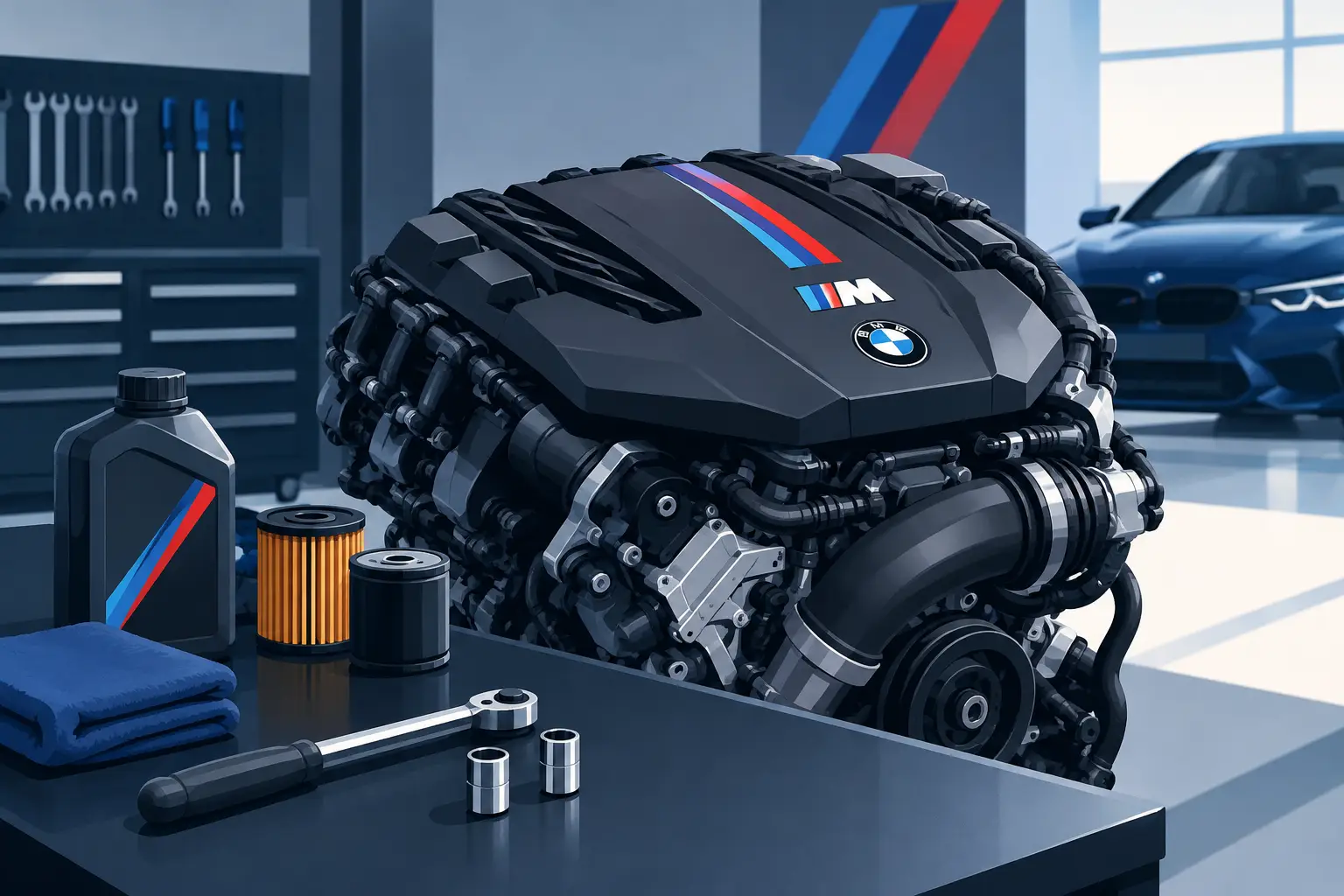
A BMW M engine rarely gives up without leaving clues. A rough cold start, a new oil smell after a hard drive, rising coolant temperature, or a drop in boost response can be the difference between a targeted repair and a complete engine replacement. These BMW M engine maintenance tips focus on the areas that protect performance while helping owners and repair shops control the cost of long-term ownership.
M powertrains are engineered for high output, high cylinder pressure, and repeated thermal stress. Whether you own an S55-powered M3 or M4, an S58 in an M3, M4, X3 M, or X4 M, or a twin-turbo S63 V8 in an M5, M8, or X5 M, maintenance needs to be based on real operating conditions rather than the longest possible factory service interval.
Oil is the first line of defense for turbochargers, bearings, VANOS components, timing assemblies, and the valvetrain. High-performance BMW engines can run hot, particularly after short trips, track sessions, heavy traffic, or repeated full-throttle acceleration. Old or diluted oil loses its ability to control heat and protect moving parts under load.
Use an oil specification approved for your exact engine and climate, and change it more frequently than the maximum dashboard interval if the vehicle is driven hard. For many M owners, an oil and filter service around every 5,000 to 7,500 miles is a sensible preventive approach. The right interval depends on mileage, driving style, tune level, oil analysis results, and how often the engine reaches full operating temperature.
The filter matters as much as the oil. A quality filter helps prevent contaminants from circulating through the engine, while a correct filter cap O-ring installation prevents leaks and pressure issues. During every service, inspect the drained oil and filter media for metallic debris, excessive fuel odor, or glitter-like particles. A small concern found early is far less expensive than bearing damage or turbocharger failure.
Avoid hard acceleration immediately after startup. Let the oil warm through normal driving before using high RPM or heavy boost. Coolant can reach its normal reading before the oil is fully up to temperature, so the gauge alone is not a complete indicator that the engine is ready for full load.
BMW M engines produce serious heat, and the cooling system has to manage it without leaks, weak circulation, or restricted airflow. Water pumps, thermostats, expansion tanks, hoses, radiators, auxiliary coolers, and charge-air cooling components should be inspected before they become a failure point.
Check coolant level only when the engine is cold, and investigate any recurring loss instead of simply topping it off. A sweet smell, dried residue around hose connections, a coolant warning, or an unexplained temperature change deserves immediate attention. On turbocharged engines, a small cooling issue can escalate quickly once boost and exhaust temperatures rise.
Keep radiator and cooler fins clear of road debris, leaves, and dirt. This is especially relevant for M SUVs and cars driven through winter weather or on gravel roads. If a vehicle has been modified, used on track, or operated in very hot climates, upgraded cooling may be worthwhile, but it should be selected for the specific platform. Adding parts without diagnosing the underlying heat issue can waste money and mask a developing mechanical problem.
On S55, S58, and S63 applications, boost plumbing and charge-air cooling are central to consistent performance. Inspect intake pipes, clamps, intercooler connections, and seals for oil residue, cracks, loose fittings, or pressure leaks. A boost leak may feel like reduced power, hesitation, inconsistent throttle response, or a check-engine light.
Oil film in turbo plumbing is not automatically a failed turbocharger, but excessive oil accumulation needs proper diagnosis. It may point to turbo seal wear, crankcase ventilation issues, or an engine that has been overfilled with oil. Replacing components based on assumptions can become expensive quickly, so confirm the cause before ordering parts.
Misfires are common enough on high-performance turbo engines that they are often dismissed. They should not be. A single misfire under load can come from a worn spark plug, weak ignition coil, injector issue, boost leak, carbon buildup, or a larger mechanical concern.
Use premium fuel from reputable stations, particularly in engines calibrated for high octane. If the car is tuned, follow the tuner’s required fuel grade precisely. Running lower-octane fuel than the calibration expects can cause knock correction, lower output, and increased stress under boost.
Spark plugs and ignition coils deserve a shorter service schedule on tuned or frequently driven M cars. The correct plug type and gap are engine-specific. An S55 with a performance tune may need plugs replaced sooner than a stock daily-driven vehicle, while an S63 V8 may require closer monitoring because of its heat load and cylinder count. Scan for stored fault codes even if the warning light has disappeared, since intermittent misfires can leave useful diagnostic information.
Direct-injection BMW engines can also develop intake-valve carbon deposits over time. Symptoms can include rough idle, hesitation, reduced efficiency, and uneven power delivery. Walnut blasting or another professional intake-cleaning method may be appropriate when inspection and symptoms support it. It is not a repair to schedule blindly, but it can restore drivability on an engine with confirmed buildup.
The best maintenance habit is paying attention to changes. BMW M engines are refined, but owners who know how their vehicle normally sounds and feels are more likely to catch a problem before it becomes catastrophic.
Be alert for persistent valvetrain noise, timing-related rattles, blue exhaust smoke, excessive crankcase pressure, new vibrations, low oil-pressure warnings, or a noticeable drop in power. White smoke with coolant loss, repeated overheating, or contamination in the oil requires immediate investigation. Continuing to drive an overheating M engine can turn a repairable cooling fault into cylinder-head, gasket, or complete-engine damage.
For S55 and S58 owners, abnormal crank hub behavior, timing faults, or unexplained running issues should be diagnosed by a BMW-experienced technician. For S63 owners, oil consumption, turbocharger response, cooling-system condition, and valve stem seal-related symptoms all deserve close attention. Every engine family has known patterns, but no fault should be diagnosed from a forum description alone. Engine code, production year, service history, and fault data matter.
A quality scan tool, compression test, leak-down test, oil-pressure verification, and borescope inspection can prevent costly guesswork. These checks help separate a failed sensor or ignition component from internal damage such as worn rings, damaged pistons, valve sealing issues, or bearing wear.
This is especially important when an M engine has suffered a low-oil event, overheating incident, turbo failure, or severe misfire. Repair shops should document compression readings, leak-down percentages, fault codes, and oil condition before recommending an engine. Owners should ask for that information. It creates a clearer repair decision and helps protect against replacing good parts.
A low-mileage weekend M car and a daily-driven M SUV do not need exactly the same service plan. Short journeys can create moisture and fuel dilution in the oil. Track use raises temperatures and accelerates wear on fluids, brakes, tires, and cooling components. A tuned engine places additional demand on ignition, fueling, turbochargers, and drivetrain components.
Keep a simple service record with oil changes, coolant work, plugs, coils, fault codes, and major repairs. For trade buyers and future owners, documented maintenance supports the value of the vehicle. It also gives a technician a much better starting point when diagnosing a developing issue.
If internal damage is confirmed, compare the true cost of rebuilding against a replacement engine. A rebuild can be the right answer when the block, cylinder head, and supporting components are known to be sound and a specialist is available. In other cases, a carefully sourced, professionally inspected replacement engine can reduce downtime and provide a more predictable route back to the road.
BAV Engines supports this decision with BMW-specific replacement engine options, fitment checks using VIN, registration, and engine code details, plus quality-focused inspection information. Matching the exact engine variant is essential, particularly where emissions equipment, turbo configuration, electronics, and model-year changes differ.
A well-maintained M engine should still be driven and enjoyed. Treat warning signs early, use the right fluids and parts, and make repair decisions from proper testing rather than hope. That approach protects the performance you bought the car for and gives you the best chance of avoiding an unexpected engine bill.