Our Location
304 North Cardinal St.
Dorchester Center, MA 02124
Are used BMW engines reliable? See how mileage, service records, inspections, correct fitment, and warranty coverage shape confident replacement purchase.
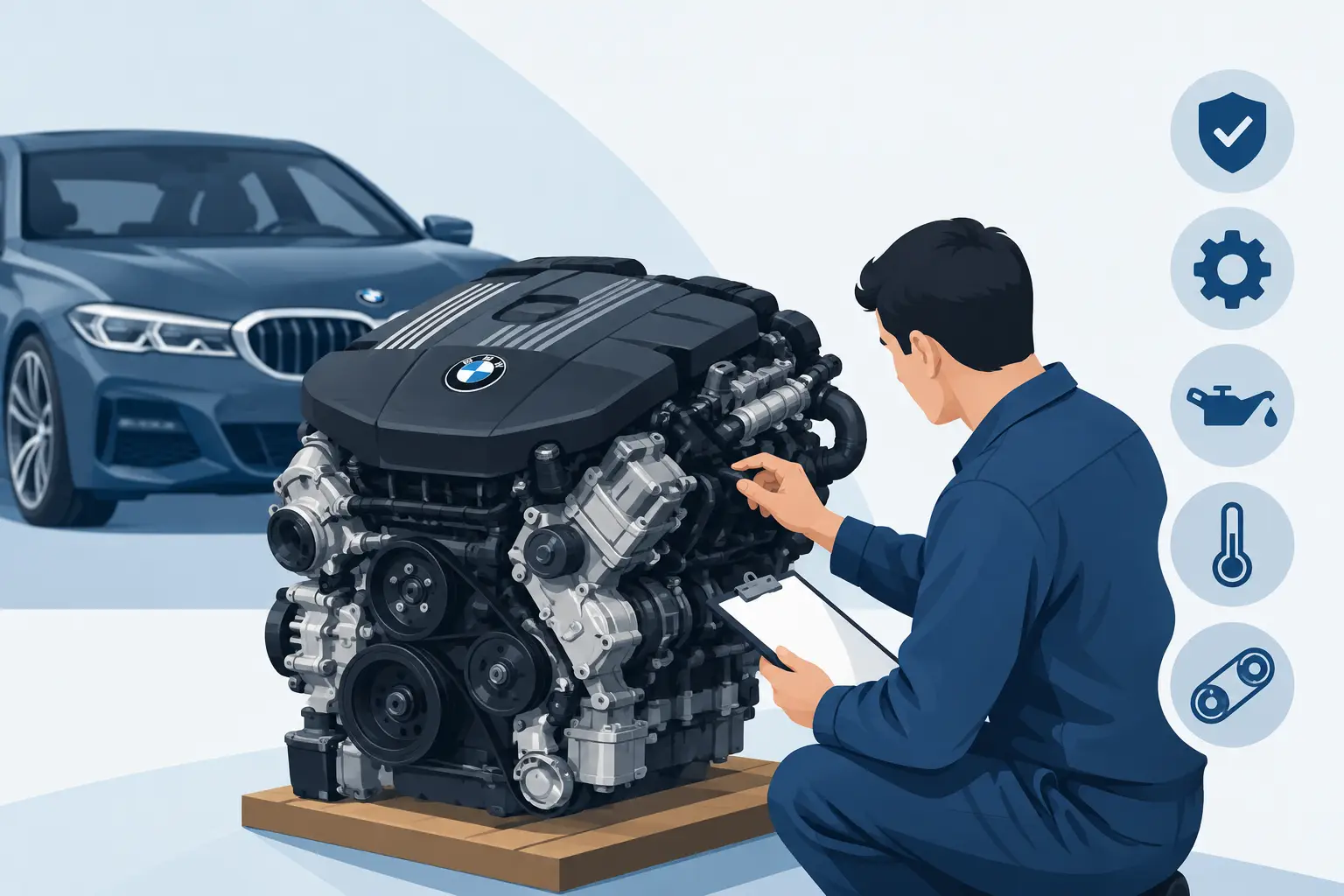
A BMW with a failed engine does not automatically need to be written off. For many owners and repair shops, a carefully sourced replacement engine is the practical route back to reliable daily driving. But are used BMW engines reliable? They can be, provided the engine is the right specification, has been assessed properly, and is installed with the supporting repairs the vehicle needs.
The word “used” alone does not describe an engine’s condition. A low-mileage donor engine with clean oil, healthy compression, no visible mechanical damage, and a verified engine code is a very different purchase from an unknown unit removed from a neglected vehicle. Reliability comes from the condition of the individual engine, its maintenance history where available, and the quality of the sourcing and fitment process.
A used BMW engine can deliver many years and thousands of miles of dependable service. BMW engines are engineered for long-term performance when oil changes, cooling-system maintenance, and timing components have been handled correctly. This is true across many popular gasoline and diesel families, from naturally aspirated engines to turbocharged units such as the B58, N55, N47, N57, B47, B57, S55, S58, and S63.
The realistic answer is that reliability depends on the engine family and the donor vehicle’s history. A well-maintained M57 diesel, for example, is widely valued for its durability and strong torque. A B58 gasoline engine can be an excellent replacement choice when it has been properly serviced and matched to the correct vehicle. On the other hand, an engine with overheating damage, poor lubrication history, water contamination, or undisclosed timing issues can create another expensive repair shortly after installation.
That is why an engine should never be selected only by model name. “BMW 3 Series engine” is not enough information for a confident order. Engine code, fuel type, production year, drivetrain, emissions equipment, electronics, and VIN compatibility all matter.
The strongest replacement-engine purchase starts with a complete picture of condition. Mileage matters, but it is not the only measure of remaining service life. A higher-mileage engine from a properly serviced highway-driven vehicle may be a safer choice than a lower-mileage engine that suffered overheating or oil starvation.
A professionally inspected engine should be checked for visible cracks, broken mounting points, damaged connectors, oil leaks, coolant contamination, and obvious signs of impact. Mechanical checks should also focus on compression where appropriate, oil quality, crankshaft rotation, turbocharger condition on forced-induction engines, and excessive wear around accessible components.
For diesel engines, buyers should consider the condition and compatibility of fuel-system components, injectors, turbo hardware, and emissions-related equipment. On gasoline turbo engines, attention should be given to the turbocharger, valve-cover and oil-filter-housing areas, cooling connections, and signs of poor oil service. BMW’s high-performance M engines require especially careful assessment because hard driving, elevated temperatures, and previous modifications can affect long-term condition.
At BAV Engines, the goal is not simply to provide an engine that physically fits in the bay. It is to help customers source a correctly matched, carefully sourced unit that gives the repair the best possible foundation.
BMW frequently used several engine versions within the same vehicle range. A 5 Series, X3, or MINI may have different engines depending on model year, market, drivetrain, power output, and emissions specification. Even engines that look similar can use different sensors, wiring, turbo systems, oil pans, ancillaries, or ECU programming.
For example, an N47 diesel is not interchangeable with every later B47 application without careful verification. An N57 and B57 may both serve as six-cylinder diesel options, but their fitment and electronic requirements differ. The same principle applies to B58, S55, S58, and S63 engines across BMW performance models.
Providing the VIN, registration details, and existing engine code allows a supplier or technician to confirm compatibility before the engine is shipped. This reduces the risk of ordering an incorrect unit, delaying a repair, or creating unexpected conversion costs.
No BMW engine family should be judged entirely by internet commentary. Individual history matters more than a broad reputation, but known service considerations should guide the buying decision.
Older BMW diesel engines such as the M57 have a strong following because of their durable basic architecture and suitability for high-mileage use when maintained correctly. They remain popular with owners, workshops, and builders, including customers planning an M57 swap project. The N47 can provide excellent fuel economy, though timing-chain condition and service history deserve close attention. Later B47 and B57 engines bring newer technology, efficiency, and strong performance, but correct emissions-system and electronic compatibility must be confirmed.
Among gasoline engines, the B58 has earned a favorable reputation for balanced power and everyday usability. It is a sought-after option in many BMW cars and SUVs. High-output engines such as the S55, S58, and S63 offer exceptional performance, but a buyer should be realistic about ownership costs. These engines may require more attention to cooling, turbocharger health, fuel delivery, and prior maintenance than a standard naturally aspirated engine.
A reliable replacement is not always the newest or most powerful engine available. It is the engine that matches the vehicle, the intended use, and the buyer’s maintenance budget.
Before committing to a replacement engine, get clear answers about the unit rather than relying on a generic description. Ask about donor mileage, the engine code, whether the engine is complete or supplied as a long block, and what mechanical inspection has been completed. Confirm what components are included, because intake systems, turbos, injectors, alternators, AC compressors, wiring, ECUs, and exhaust components are not always transferred with every assembly.
The following checks are especially useful when comparing engines:
A clear warranty is valuable, but it should not replace due diligence. Read the terms closely. Most warranty programs require professional installation, fresh fluids and filters, a documented inspection of cooling and lubrication systems, and replacement of failed external components that could damage the replacement engine.
Even the best donor engine can fail early if it is installed into a vehicle with an unresolved fault. If the original engine failed because of overheating, contaminated oil, a blocked radiator, a weak oil pump, failing injectors, or a damaged turbocharger, those underlying issues must be repaired before the replacement unit is started.
A proper installation should include new engine oil, filter, coolant, and any required seals or gaskets. Depending on the engine and the cause of failure, the technician may also need to inspect or replace the thermostat, water pump, radiator, oil cooler, hoses, PCV components, timing-related parts, fuel injectors, or turbo oil-feed lines. On diesel applications, correct fuel-system cleaning and diagnostics can be critical.
The engine should also be coded or adapted where required, and fault codes should be addressed rather than cleared and ignored. A road test, fluid-level recheck, and follow-up inspection after initial heat cycles give the installer a chance to identify small leaks or calibration issues before they become larger problems.
A new factory engine is usually the most expensive option, and it may not make financial sense for an older BMW or MINI. A rebuilt engine can be attractive, but rebuild quality varies substantially based on the parts used, machining standards, and experience of the builder. It may also involve a longer lead time.
A used replacement engine often offers the best balance of cost, OEM-level design, and availability. Because it is an original BMW assembly, it retains the factory-engineered block, head, internals, and fitment characteristics. The trade-off is that its prior life matters, which is why donor sourcing, inspection, compatibility support, and warranty options should be central to the purchase decision.
For a daily driver, family SUV, work vehicle, restoration, or workshop repair, the right used BMW engine can be a sensible and reliable investment. Choose by verified condition and exact fitment, support the installation with the necessary surrounding repairs, and you give the vehicle a credible path back to the road without the cost of a new factory powertrain.