
Our Location
304 North Cardinal St.
Dorchester Center, MA 02124
BMW engine international shipping explained: fitment checks, crating, paperwork, delivery planning, and what to confirm before you order a replacement.
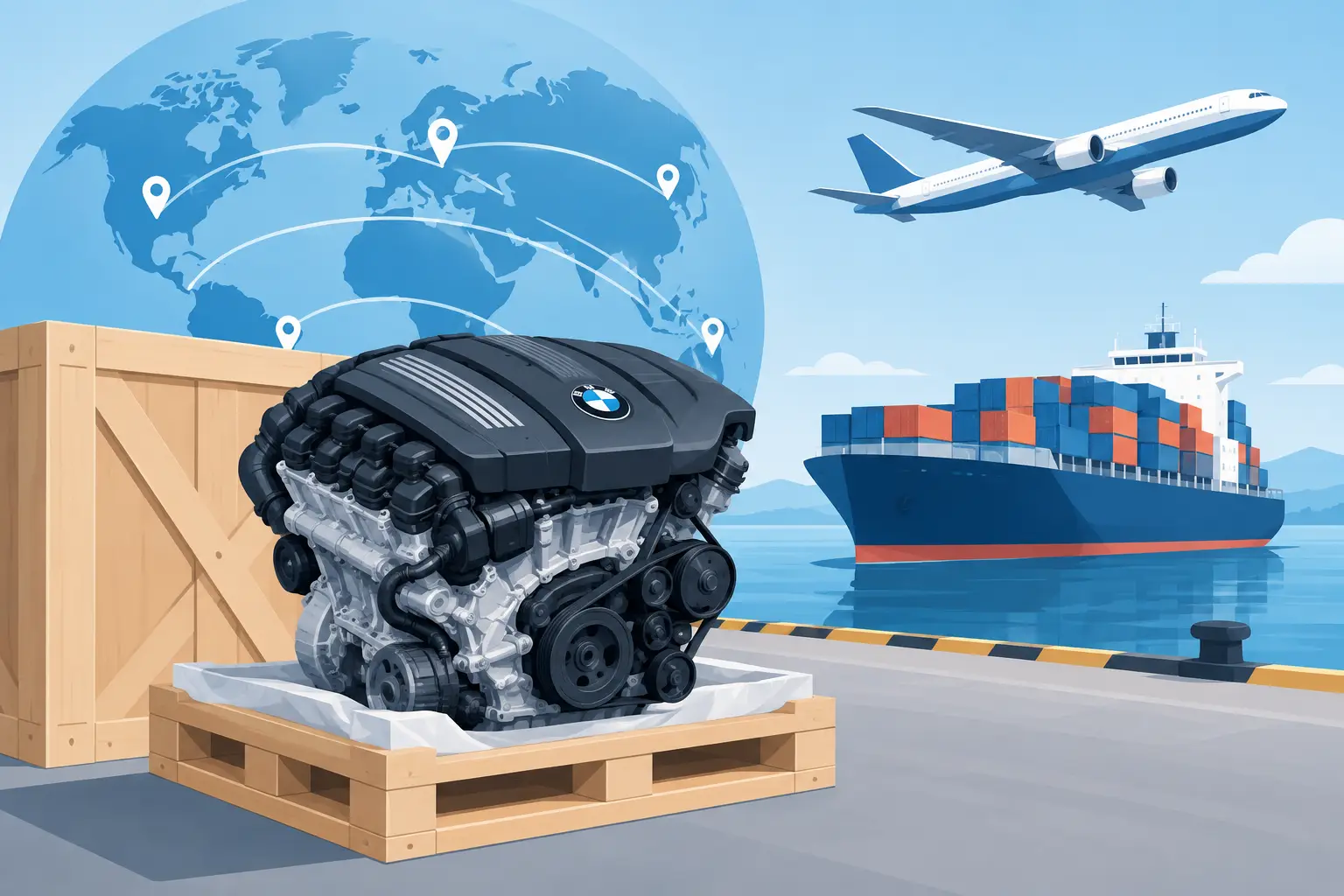
A replacement BMW engine can save a 3 Series, X5, MINI, or M car from an expensive write-off, but distance changes the buying process. BMW engine international shipping is not simply a matter of putting a used engine on a pallet. Correct fitment, safe preparation, export paperwork, customs clearance, and delivery arrangements all need to line up before the engine leaves the supplier.
For a private owner, repair shop, or trade buyer, the goal is straightforward: receive the right complete engine in the condition described, without delays that keep the vehicle off the road. The best way to achieve that is to confirm the technical details first and treat shipping as part of the engine purchase, not an afterthought.
The most expensive international shipping mistake is sending an engine that does not match the vehicle. BMW uses closely related engine families across many models, but the same displacement or fuel type does not guarantee a direct replacement. An N47 diesel, for example, may appear in several 1 Series, 3 Series, 5 Series, and X models, while differences in emissions equipment, turbo setup, wiring, sump configuration, and ancillary components can affect installation.
Before an engine is allocated for export, provide the VIN whenever possible. A registration number may also help identify the vehicle in some markets, but the VIN gives the clearest route to original build specification. Experienced buyers can also provide the engine code, part number, production year, transmission type, and clear photos of the existing engine label or components.
This matters just as much with higher-output engines. A B58, S55, S58, or S63 assembly may share a family name with another unit, yet have important differences in turbos, cooling hardware, electronics, or peripheral equipment. A supplier should clarify whether the sale is for a long block, bare engine, or complete engine assembly with items such as the turbocharger, injectors, fuel system components, manifolds, wiring, and sensors. Never assume every photographed component is included unless it is stated in the order details.
A used engine is heavy, valuable, and contains materials that carriers and customs authorities may regulate. Preparation begins with the mechanical condition of the unit. Carefully sourced engines should be professionally inspected for visible damage, oil quality, signs of overheating, external wear, and overall mechanical condition. Where applicable, compression or related condition checks provide further confidence before shipment.
The engine must then be prepared for transport. Fluids are normally drained or managed according to the shipping method and destination requirements. Open ports, lines, and electrical connections should be protected against contamination and damage. The engine is secured to a suitable pallet or crate so it cannot shift under forklift handling, road vibration, or ocean freight movement.
A properly prepared shipment generally needs a commercial invoice, packing information, product description, value declaration, and export documentation appropriate to the origin country. Depending on the destination, the recipient may also need to provide a tax number, importer identification, business details, or customs broker instructions. Requirements vary, so no supplier should promise that every country follows the same process.
The right shipping method depends on urgency, destination, budget, and the engine package size. Road freight can be practical for regional cross-border deliveries. Air freight can reduce transit time for urgent repair work, but it is often significantly more expensive for a crated engine and may involve tighter restrictions. Ocean freight is usually more economical for long-distance movements, especially for commercial orders or multiple engines, though it takes longer and can add port handling steps.
For one replacement engine, the lowest quoted freight price is not always the best value. A cheaper service may involve more transfers, less predictable arrival timing, or delivery only to a freight terminal. Ask whether the quoted rate includes residential delivery, liftgate service, customs clearance support, port charges, or final-mile delivery. A repair shop with a forklift can often receive freight more easily than a homeowner, but a private buyer can still arrange delivery when the carrier and access requirements are discussed in advance.
Import duty, sales tax, VAT, brokerage fees, and local handling charges are separate from the engine price in many international transactions. Who pays these charges depends on the shipping terms agreed for the order. Buyers should establish this before payment, rather than discovering unexpected costs once the crate arrives at the border or port.
Describe the item accurately as a used automotive engine or replacement engine assembly, with the correct value and documentation. Under-declaring the value can create customs delays, penalties, and problems with any freight insurance claim. It also does not protect the buyer when a shipment is lost or damaged.
Customs clearance can take a day or several days depending on the country, the documents supplied, and whether the shipment is selected for inspection. Plan for that possibility if the vehicle is occupying a workshop bay or if a customer has been promised a repair date. A realistic turnaround estimate includes sourcing, inspection, crating, carrier collection, transit, customs, and local delivery.
International freight passes through multiple handling points. Even a securely crated engine should be inspected at delivery before the driver leaves whenever possible. Check the crate or pallet for punctures, crushed corners, impact marks, loose strapping, or evidence of fluid leakage. Photograph any concerns immediately, including the shipping labels and all sides of the packaging.
If there is visible damage, record it clearly on the carrier paperwork rather than signing for the shipment as received in good condition. Keep the packaging until the issue is reviewed. This creates a clear record for the carrier, freight insurer, and supplier if a claim is needed.
Once the engine is uncrated, verify the identification marks, engine code, supplied components, and general condition against the sales confirmation. A qualified BMW technician should inspect the unit before installation and transfer components as required for the specific vehicle. New service items such as seals, gaskets, filters, fluids, belts, and cooling-system parts are often sensible while access is available. On engines known for timing, injector, turbo, or cooling concerns, the technician can advise whether preventive work is worthwhile before installation.
A reliable supplier should be able to answer practical questions without vague promises. Confirm the engine code and fitment basis, donor mileage if known, inspection process, included components, warranty terms, and the preparation standard for export. Ask for the crate dimensions and estimated shipment weight if you need to arrange your own freight or confirm workshop receiving capacity.
You should also establish where the engine will be delivered, whether customs charges are included, and what happens if the carrier cannot access the property. For a garage, provide opening hours, a contact number, and confirmation of unloading equipment. For a residential address, ask if liftgate service or a nearby freight depot is the safer option.
BAV Engines supports buyers with BMW-specific fitment guidance because the right engine choice protects both the repair budget and the installation timeline. Whether the need is an efficient B47 or B57 diesel, a proven M57 or N57, a turbocharged B58, or a performance-focused S55, condition and compatibility should be confirmed before the crate is booked.
A replacement engine is a major purchase, but international distance does not have to make it uncertain. Provide complete vehicle information, confirm exactly what is included, budget for import charges, and arrange a delivery point that can safely receive freight. With those details handled early, the engine can arrive ready for the technician who will put the BMW back on the road.