Our Location
304 North Cardinal St.
Dorchester Center, MA 02124
Find used engines for BMW and MINI with verified fitment, careful inspection, warranty options, and dependable shipping for a confident repair process.
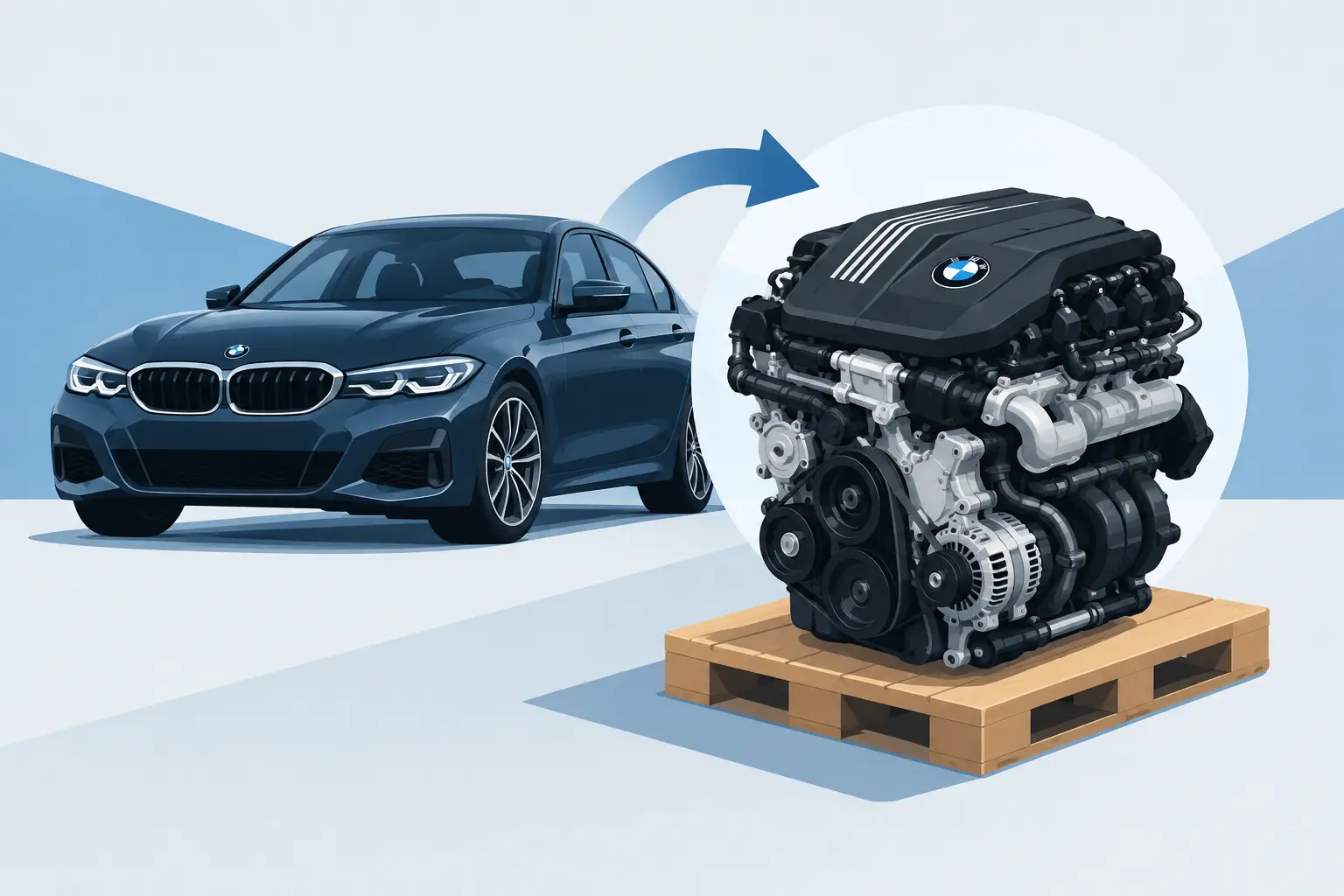
A failed timing chain, overheating event, low compression reading, or oil-pressure issue can turn a well-kept BMW into a vehicle that is suddenly too expensive to repair. Used engines offer a practical route back to the road when the rest of the vehicle is worth saving. The right replacement can preserve the original driving character, retain OEM-level fitment, and cost considerably less than a new factory long block.
For BMW and MINI owners, though, an engine is never just an engine. A 3.0-liter diesel can have several versions with different electronics, turbo arrangements, emissions equipment, and production-year changes. That is why a successful replacement starts with accurate identification, not simply finding an engine with the same displacement.
A complete replacement engine can be the sensible choice when internal damage is extensive. Rebuilding a worn or damaged unit may require machining, pistons, bearings, timing components, a cylinder head, and many hours of labor. On engines with major failure, that work can exceed the value of a low-mileage donor assembly.
Carefully sourced used engines give owners and repair shops another option. They are particularly useful for vehicles with good transmissions, clean bodies, documented maintenance, and strong resale or personal value. This includes daily-driven 1 Series, 3 Series, 5 Series, and X Series models, as well as enthusiast-owned Z cars, M models, and MINI variants.
The value is not only the purchase price. A complete engine assembly can reduce repair time because the workshop begins with an established factory-built unit rather than an engine that must be rebuilt from individual components. The actual savings depend on the engine family, donor mileage, required accessories, and installation labor. A replacement is not automatically the cheapest choice, but it is often the more predictable one when damage is severe.
BMW has produced many engine variants that look similar at first glance. A customer searching for an N47 diesel, for example, must account for vehicle generation, power output, drivetrain layout, emissions specification, and the components being transferred from the original engine. The same care applies to M57, N57, B47, and B57 diesel engines, along with gasoline families such as the B58, S55, S58, and S63.
The engine code is the strongest starting point. It identifies the family and configuration more precisely than a model badge alone. A 335i badge, for example, does not guarantee that every engine from another 335i will be a direct match. Production year, chassis generation, and market specification can change the engine management system, sensors, fuel system, cooling layout, or exhaust-related equipment.
Before placing an order, provide the vehicle identification number, registration details where available, engine code, model year, and a clear description of the failure. This allows the supplier to check the original specification and identify suitable options. It also helps determine whether the replacement is supplied as a bare engine, long block, or more complete assembly.
Even a compatible replacement may require certain original parts to be transferred. Common examples include the intake system, exhaust manifold or turbo-related components, wiring harness, sensors, injectors, fuel pump, alternator, AC compressor, and ECU-related hardware. The exact list depends on the donor engine and the vehicle receiving it.
For this reason, experienced technicians inspect both engines before installation. They compare connectors, housings, sensors, turbochargers, oil pans, and mounting points. A small mismatch discovered while the engine is on a stand is far easier to resolve than one discovered after installation.
A used engine should not be selected on mileage claims alone. Lower mileage can be beneficial, but mechanical condition matters just as much. A professionally inspected unit should be assessed for visible damage, excessive wear, oil condition, water contamination, and signs of overheating or poor maintenance.
Compression is one of the most useful indicators of internal engine health. Consistent cylinder readings help show that the pistons, rings, valves, and head sealing surfaces are functioning as expected. On applicable engines, additional checks may include leak-down testing, crankshaft rotation, camshaft condition, timing-component inspection, and examination of turbocharger play.
Oil quality also tells a story. Heavy sludge, metallic debris, or coolant contamination can point to a donor engine that needs further investigation. External checks matter too: inspect the valve cover area, oil filter housing, sump, block, cylinder head, coolant passages, and mounting points for cracks, leaks, corrosion, or impact damage.
No used component can be described as brand new, and an honest purchase process should reflect that. The goal is to source an engine that has been carefully evaluated for quality and reliability, then install it with the service work needed to support a long repair life. New fluids, filters, gaskets, seals, and any age-sensitive service items should be considered while access is easy.
BMW’s diesel engines remain popular replacement choices because many vehicles accumulate high mileage while retaining strong chassis and interior condition. The M57 has a well-established reputation among owners and swap builders, while the N47, N57, B47, and B57 cover a broad range of later BMW cars and SUVs. Each family has its own fitment considerations, especially around timing design, turbocharging, emissions equipment, and electronic control systems.
Gasoline buyers have different priorities. A naturally aspirated engine may suit an owner seeking straightforward daily reliability, while a turbocharged B58 can be the right answer for a late-model performance sedan or SUV. M engines require even closer attention. S55, S58, and S63 replacements must match the vehicle’s exact specification, cooling package, fuel system, turbo setup, and control electronics. For these applications, technical fitment support is not an extra service. It is a safeguard against an expensive ordering mistake.
MINI engines deserve the same level of checking. MINI and BMW shared technologies across several generations, but the installation layout, ancillaries, and calibration requirements can differ significantly. Confirm the code and vehicle details rather than assuming a shared family means direct interchangeability.
The engine price is a major part of the decision, but it is not the complete repair cost. Installation labor, shipping, fluids, filters, seals, diagnostic work, coding, and replacement service parts should be included in the budget from the start. If a turbocharger, cooling system, injector, or fuel-system fault caused the original engine damage, that cause must be corrected before the replacement is started.
This is especially important after overheating, oil starvation, or timing failure. Reusing contaminated oil coolers, damaged hoses, blocked cooling components, or faulty injectors can put a sound replacement engine at risk. A qualified technician should diagnose the root cause, not simply replace the failed assembly and hope for the best.
A warranty option can add valuable reassurance, but buyers should understand what it covers and the installation requirements that apply. Keep invoices for servicing parts and labor, follow the supplier’s procedures, and report any concerns promptly. Clear documentation protects both the vehicle owner and the repair business.
Start with vehicle details, then discuss the intended repair with a BMW-aware supplier. Explain whether you need a complete assembly, a long block, or an engine for a project or M57 swap. Ask about donor mileage, inspection process, included components, warranty availability, and shipping arrangements before committing.
BAV Engines supports this process with BMW and MINI-specific inventory and fitment checks based on VINs, registrations, and engine codes. That specialist approach matters when the difference between two similar-looking engines can involve thousands of dollars in labor and parts.
Once the engine arrives, inspect it before installation and retain the delivery paperwork. Your shop should compare it with the original unit, replace appropriate service items, and follow manufacturer procedures for initial start-up, fluid filling, priming, and diagnostic checks. Taking these steps protects the investment and helps prevent avoidable delays.
A replacement engine is a major purchase, but it does not have to be a gamble. Choose confirmed fitment, documented condition, and a repair plan that addresses the cause of the original failure. With the right donor engine and careful installation, a BMW or MINI that seemed finished can return to dependable service for many more miles.