Our Location
304 North Cardinal St.
Dorchester Center, MA 02124
Learn how to choose MINI engine replacements by VIN, code, model year, fuel type, mileage, inspection, warranty, and fitment before you buy with confidence.
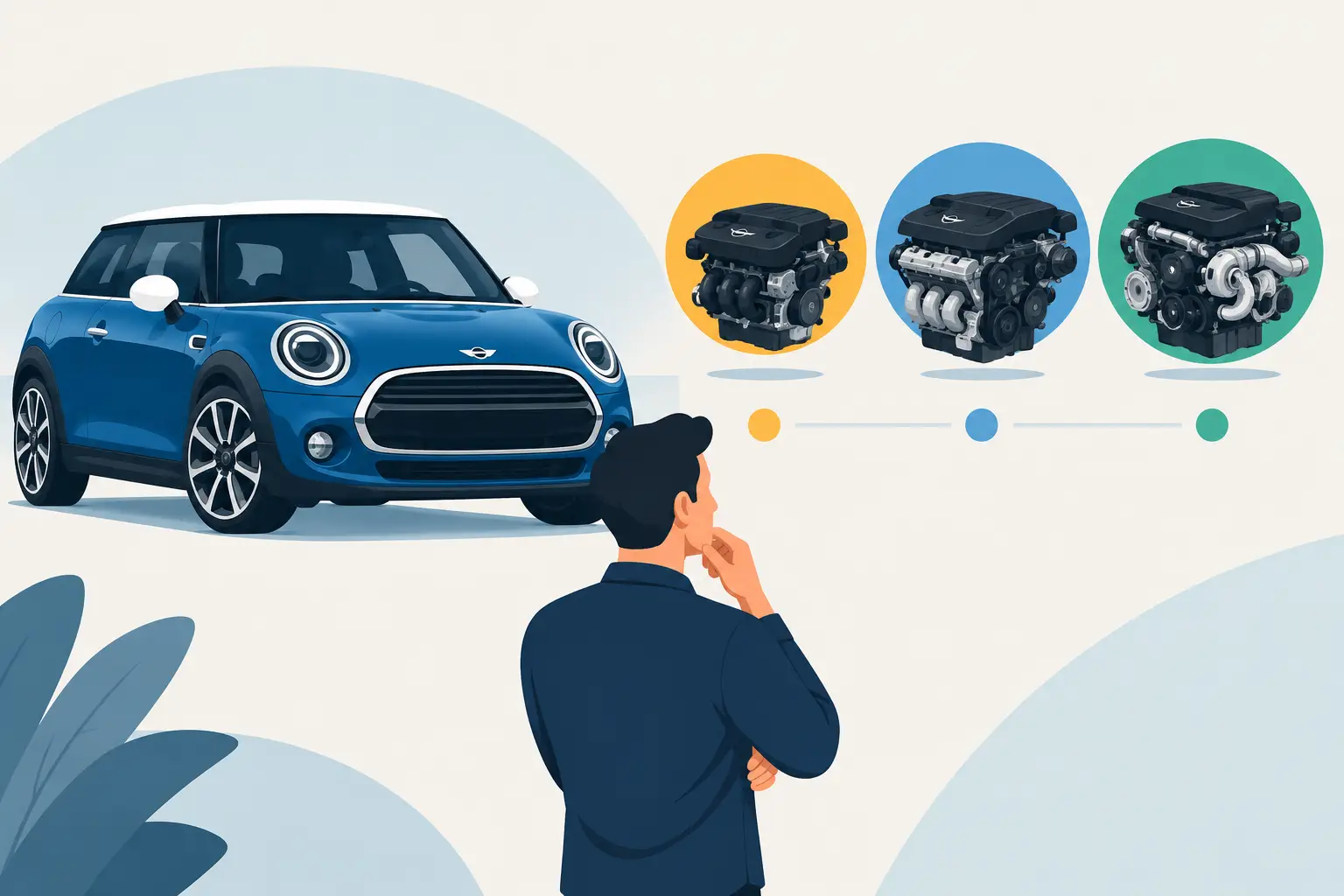
A replacement MINI engine can turn an uneconomical repair into a sensible way to keep a well-loved car on the road. But MINI fitment is rarely as simple as matching the badge on the tailgate. Knowing how to choose MINI engine replacements starts with the details that determine whether the unit will install correctly, communicate with the vehicle’s electronics, and deliver the reliability you expect.
A Cooper, Cooper S, Clubman, Countryman, Convertible, or John Cooper Works model may use different engine families across production years, even when the exterior design looks almost identical. The right purchase is the engine that matches your car’s VIN, engine code, fuel system, turbo setup, transmission arrangement, and emissions specification – not simply the lowest-priced engine listed for a MINI.
Before selecting a replacement, confirm why the original engine failed. This protects you from installing a good used engine into a car with an unresolved fault that could damage it again.
For example, a timing chain failure, severe oil consumption, overheating, low compression, bearing damage, or a cracked block can justify a complete replacement engine. However, an external oil leak, failed water pump, turbocharger fault, injector issue, or wiring problem may not require a complete assembly. A qualified diagnosis helps you control costs and order the correct level of replacement.
If the engine failed because of overheating, investigate the radiator, thermostat housing, cooling fan, hoses, and water pump. If it suffered oil starvation, check the oil cooler, oil lines, pickup system, turbocharger, and service history. A replacement engine should be installed alongside the repairs that caused the first failure, not used as a shortcut around them.
The VIN is the most reliable starting point for fitment. It identifies the vehicle’s build specification, production period, engine configuration, and market-related equipment. Your registration can be useful, but it should not be the only source used to confirm an engine, particularly for imported vehicles, modified cars, or models registered later than their manufacture date.
The engine code provides another essential layer of confirmation. Common MINI engine families include the Prince-series N12, N14, N16, and N18 engines, as well as later BMW-developed B37, B38, B47, and B48 units. These codes indicate far more than displacement. They can identify whether the engine is naturally aspirated or turbocharged, gasoline or diesel, three-cylinder or four-cylinder, and which generation of management components it uses.
A 1.6L turbo N18 from a later Cooper S, for instance, is not automatically interchangeable with an earlier N14 simply because both are turbocharged 1.6L engines. Differences in sensors, intake hardware, exhaust equipment, ECU calibration, cooling connections, and ancillary mounts can affect the installation. The same principle applies to newer 1.5L B38 and 2.0L B48 engines found across various F-series MINI platforms.
Provide the VIN, engine code if available, model year, fuel type, and transmission type before purchasing. This gives a specialist supplier the information needed to verify the core long block and advise on any parts that may need to transfer from your original engine.
MINI engines are closely tied to chassis generations. Treating every Cooper or every Countryman as mechanically identical is one of the most common causes of incorrect orders.
The first-generation R50 and R53 models used engines that differ substantially from the Prince engines fitted to many R55, R56, R57, R58, R59, R60, and R61 vehicles. Later F54, F55, F56, F57, F60, and related models moved onto BMW modular engine families. Within those ranges, a Cooper may use a different engine than a Cooper S or John Cooper Works version built in the same year.
Diesel variants need the same attention. A MINI One D or Cooper D may use a different engine family and emissions arrangement from a gasoline equivalent. Confirm whether the vehicle has diesel particulate filter equipment, EGR components, AdBlue-related systems where applicable, and the correct emissions calibration for its destination market.
Fitting a Cooper S or John Cooper Works engine into a lower-spec MINI can be possible in a full build project, but it is not a straightforward replacement. The conversion may require the correct ECU, wiring harness, intercooler, exhaust, brakes, transmission, driveshafts, fuel system, and coding work.
For a practical repair, choose an engine that matches the factory specification. It reduces labor time, keeps parts compatibility clear, and avoids unexpected costs once the work has started.
Used replacement engines are sold in different configurations. A bare engine generally includes the core block and cylinder head, while a long block may include internal components and cylinder head assembly but exclude many external accessories. A complete engine assembly may include items such as the intake manifold, turbocharger, injectors, fuel rail, wiring, alternator, starter, or air-conditioning compressor, depending on the specific unit.
There is no universally best option. A garage with the original engine available may prefer a tested long block and transfer known-compatible external parts. This can be cost-effective when the turbo, injectors, wiring, and accessories from the old engine are in good condition. A complete assembly may be the better choice when the original engine has suffered serious damage or when faster turnaround is the priority.
Ask exactly what is included and what must be transferred. Clarify the status of the turbocharger, injectors, high-pressure fuel pump, intake components, sensors, wiring loom, flywheel or flexplate, and auxiliary units. Photographs of the actual engine are useful, but they should support fitment confirmation rather than replace it.
Lower mileage is valuable, but it is not the only measure of a good used MINI engine. A well-maintained engine with sensible mileage and documented inspection can be a stronger purchase than an unknown low-mileage unit with no condition information.
Look for an engine that has been carefully sourced and professionally inspected for visible damage, oil condition, mechanical wear, and signs of overheating. Where appropriate, ask about compression testing, cylinder condition, crank rotation, service history, and donor-vehicle mileage. For turbocharged engines, the condition of the turbo system and evidence of oil contamination deserve particular attention.
MINI engines can be sensitive to neglected oil changes, timing component wear, cooling-system issues, and carbon buildup. An inspection process cannot make a used engine brand-new, but it can reduce avoidable risk and give you a clearer basis for comparison.
The engine price is only one part of the repair. A realistic budget should include labor, fluids, filters, gaskets, seals, coolant components, belt-drive items, and any parts that are sensible to replace while the engine is out.
Many installers recommend fitting a new timing kit or checking timing components where access is easier, depending on the engine family and condition of the replacement unit. It may also be wise to replace the clutch on a manual car, inspect the dual-mass flywheel, renew worn engine mounts, and service the cooling system. On automatic vehicles, confirm compatibility with the existing transmission and flexplate arrangement.
This is where the cheapest engine can become the most expensive option. A correctly matched, tested engine with clear condition information may cost more upfront but can save substantial labor and downtime.
A warranty gives useful protection, but read what it covers and what it requires. Used-engine warranties commonly depend on professional installation, documented servicing, correct fluids, replacement of service items, and proof that the original cause of failure was corrected. They may cover the core engine while excluding external accessories or labor costs.
Confirm the warranty length, claim procedure, and whether you need to retain the failed unit. Also ask how the engine will be prepared for shipping, whether delivery is available to your location, and what unloading equipment is needed. For repair shops, clear delivery timing can be just as important as the purchase price when a customer’s vehicle is occupying a bay.
BAV Engines helps buyers confirm fitment using VINs, registrations, and engine codes, with carefully sourced replacement units tested for quality and reliability before shipment.
A good supplier should be prepared to answer practical questions before the order is placed. Can your original intake or turbo be transferred? Does the engine need a specific sensor moved over? Is coding required after installation? What should your technician inspect before first startup?
Those questions are not complications. They are part of buying the right engine. Choose a MINI replacement unit based on verified fitment, inspected mechanical condition, sensible warranty coverage, and the support needed to return your car to the road with confidence.