Our Location
304 North Cardinal St.
Dorchester Center, MA 02124
Find used BMW engines matched by VIN, engine code, and model. Learn what inspection, mileage, warranty, and shipping details matter before you buy one.
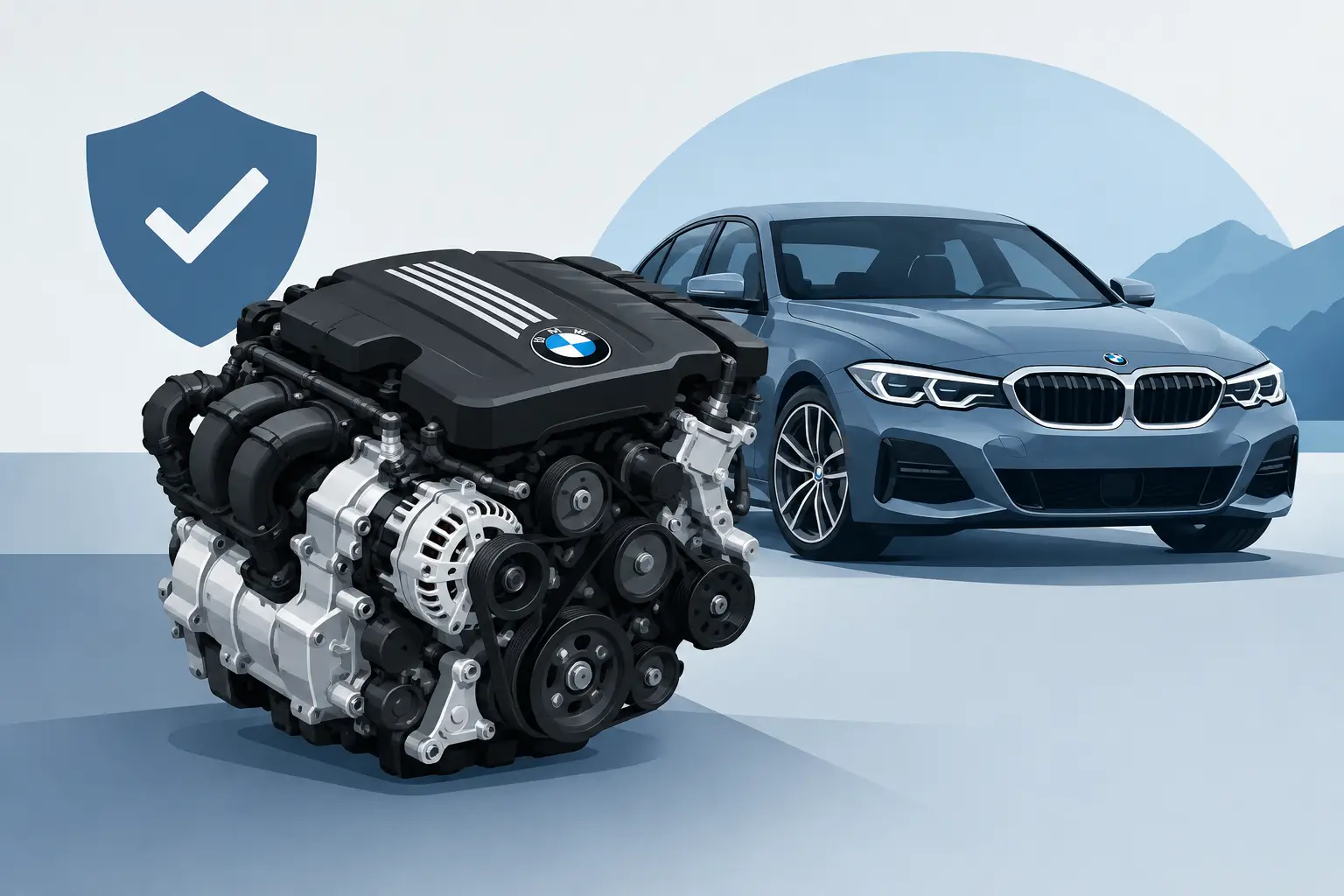
A failed BMW engine can turn a well-kept vehicle into an expensive decision overnight. Used BMW engines offer a practical route back to reliable driving when the replacement is correctly matched, professionally inspected, and supplied with clear condition information. The goal is not simply to find an engine that starts – it is to source one that belongs in your specific BMW, supports the equipment already fitted to the car, and makes financial sense compared with a new factory unit.
For owners, repair shops, and trade buyers, the best replacement is usually the one that combines verified fitment, sensible donor mileage, and honest information about what is included. That approach can restore a 3 Series, X5, MINI, or M model without paying the price of a complete new powertrain.
A replacement engine is often needed after overheating, oil starvation, timing chain damage, internal wear, turbo failure, or a major loss of compression. In many of these cases, rebuilding the original engine is possible, but parts costs, machining work, and labor hours can quickly exceed the cost of a carefully sourced used assembly.
A used engine can be particularly effective when the vehicle itself is in good condition. A BMW with a sound transmission, clean body, service history, and a well-maintained interior may have years of useful life remaining. Replacing the engine preserves that value and avoids the disruption of finding another vehicle with an unknown history.
The savings vary by model and engine family. A naturally aspirated four-cylinder or six-cylinder engine may be relatively straightforward to replace, while turbocharged, diesel, hybrid-compatible, and BMW M powertrains require more careful planning. The principle remains the same: correct fitment and mechanical condition matter more than choosing the lowest advertised price.
“BMW 3 Series engine” is not enough information to place an order with confidence. The same model range can use several engines across different years, markets, drivetrains, and emissions specifications. A 320d, for example, may use an N47 or B47 depending on production year and configuration. An X5 can be fitted with a range of gasoline and diesel units, from conventional six-cylinders to twin-turbo V8 engines.
The most reliable starting point is the VIN, followed by the engine code, vehicle registration details, model year, fuel type, and transmission arrangement. This information helps identify the correct basic engine and any differences in sensors, turbochargers, wiring, emissions hardware, sump configuration, or accessory mounting points.
BMW engine codes make the selection process much more precise. Common families include the M57 and N57 diesel six-cylinders, N47 and B47 four-cylinder diesels, B57 diesel engines, B58 turbocharged gasoline six-cylinders, and performance units such as the S55, S58, and S63.
An engine from the same family is not always a direct replacement. Power output, ECU calibration, turbo setup, emissions equipment, and production updates can differ. For a workshop, this may mean transferring selected parts from the original engine. For a private owner, it means providing complete vehicle details before purchase rather than relying on visual similarity alone.
Before buying, establish exactly what the assembly includes. A complete engine may include major external components, but the definition of “complete” can vary. Some installations require reusing the original intake, exhaust manifold, injectors, turbocharger, alternator, air-conditioning compressor, wiring harness, flywheel, or oil pan.
There is no universal answer because it depends on the engine, donor vehicle, and failure that caused the original engine to be replaced. If a turbocharger failed and sent debris through the intake or oil system, simply fitting another engine without addressing the cause can create a second failure. A professional installer should inspect related systems, clean or replace contaminated components, and renew service items as needed.
A used engine has already completed miles in another vehicle, so condition must be assessed before it reaches the buyer. Low mileage is valuable, but it is not the only measure of reliability. A low-mileage engine that has been poorly stored or removed after serious mechanical damage is not a better option than a higher-mileage unit with a sound service background and documented inspection.
A quality-focused inspection should assess practical indicators of internal and external condition, including:
Inspection standards can vary with engine type and the condition in which the donor vehicle arrived. Diesel engines such as the N47, N57, M57, B47, and B57 need careful attention to timing components, fueling systems, and turbo-related condition. Gasoline engines such as the B58, S55, S58, and S63 require the same disciplined approach, with additional consideration for high-output turbocharging systems and cooling components.
BAV Engines carefully sources and professionally inspects replacement assemblies to help buyers purchase with confidence. A specialist supplier should be able to discuss the engine code, donor mileage where available, visible condition, and the parts included in the sale before shipment.
Mileage is useful because it gives a broad indication of expected wear, but it should be viewed alongside donor history and inspection results. A lower-mileage engine is often preferred for a long-term ownership plan, a restoration, or a high-value vehicle. However, an engine with moderate mileage can still be an excellent replacement if it has been tested for quality and reliability and maintained correctly.
Ask how the engine was stored after removal. Engines should be kept protected from weather and moisture, with vulnerable openings covered to prevent dirt entering the intake, exhaust ports, or cooling passages. Long storage without proper protection can create issues that are not reflected in the donor vehicle’s mileage.
For high-performance BMW M engines, history becomes even more valuable. An S55, S58, or S63 replacement should be selected with a close understanding of its specification and intended use. A track-focused build, a standard road car, and a dealership repair may have different requirements for mileage, ancillary components, and warranty coverage.
An engine purchase is only one part of the repair. Labor, fluids, filters, gaskets, mounts, belts, coolant hoses, and diagnostic work should be included in the repair budget. It is often sensible to replace accessible wear items while the engine is out of the vehicle, especially if labor access will be difficult once it is installed.
A reputable technician should also identify why the original engine failed. For example, replacing an N47 engine after timing chain damage without checking lubrication condition and related components can leave unanswered questions. On turbocharged engines, the intake tract, intercooler, oil feed and return lines, and cooling system may need close inspection. On diesel applications, fuel-system cleanliness and emissions-related components may also affect the outcome.
For experienced builders, an M57 swap kit can simplify certain conversion projects by bringing together the parts needed for a more organized installation. Even then, planning should cover drivetrain compatibility, wiring, ECU requirements, cooling capacity, exhaust routing, and local emissions rules.
Warranty availability offers useful protection, but buyers should read the terms rather than treating every warranty as identical. Coverage periods, installation requirements, approved fluids, service documentation, labor reimbursement, and exclusions can differ. A warranty is most valuable when the supplier explains what is covered and the installer follows the required preparation procedures.
Shipping also deserves attention. A replacement engine is a substantial, high-value shipment that should be packed and secured properly for transit. Confirm delivery timing, whether the shipment is to a residential address or commercial workshop, unloading requirements, and what to do if packaging shows damage on arrival. International buyers should also allow for import paperwork, duties, and local delivery arrangements.
The right purchase starts with a conversation based on facts: VIN, registration, engine code, model year, fuel type, transmission, and the reason the original engine failed. This allows fitment support to narrow the options before money is spent and before a shop schedules the installation.
Used BMW engines are not a compromise when they are selected correctly. They are a cost-conscious, OEM-compatible repair option for vehicles worth keeping on the road. Choose an assembly that has been carefully sourced, inspected for mechanical condition, matched to your vehicle’s specification, and backed by clear support. That preparation gives your BMW the best chance of returning to the road with the performance and dependability you expect.